
Guide
Khmer Temples in Thailand
Twenty temples, a map and what to look for at each one
Download the PDFChecked November 2026. Latest version: thailandexplorer.org/guides/khmer-temples-in-thailand
Most people think you have to go to Cambodia to see Khmer temples. You don’t. Thailand has dozens of them, and they’re spread a lot wider than I knew when I started looking. My Thai family farms in Buriram, so Phanom Rung was the one I knew about. Then I found them in Sukhothai, in Lopburi, out west in Kanchanaburi and all the way down in Phetchaburi.
This guide covers twenty you can visit, grouped by area, with a map, what to look for at each one, and the hours and fees I could confirm. Where I couldn’t confirm something, I say so.
Why Thailand has Khmer temples
The Khmer Empire ruled much of Southeast Asia from about the 9th century to the 15th, from its capital at Angkor in what’s now Cambodia. Its builders and its ideas reached deep into what’s now Thailand. An old road ran from Angkor northwest to Phimai, and temples, rest houses and hospitals went up along it.
A few things are worth knowing before you go, because a lot of what’s written online gets them wrong:
- These temples went up over about 300 years, and most were changed again later. Thai builders in the Sukhothai and Ayutthaya periods added halls, stupas and Buddha images to many of them.
- Many were built for Shiva, but Phimai and Phra Prang Sam Yot were Buddhist from the start.
- Khmer style doesn’t always mean Khmer rule. At Mueang Sing and Wat Chao Chan, the style tells you Khmer ideas got there, and nobody can say for sure who was in charge.
- Dates are often rough. Where the sources disagree, I give a range.
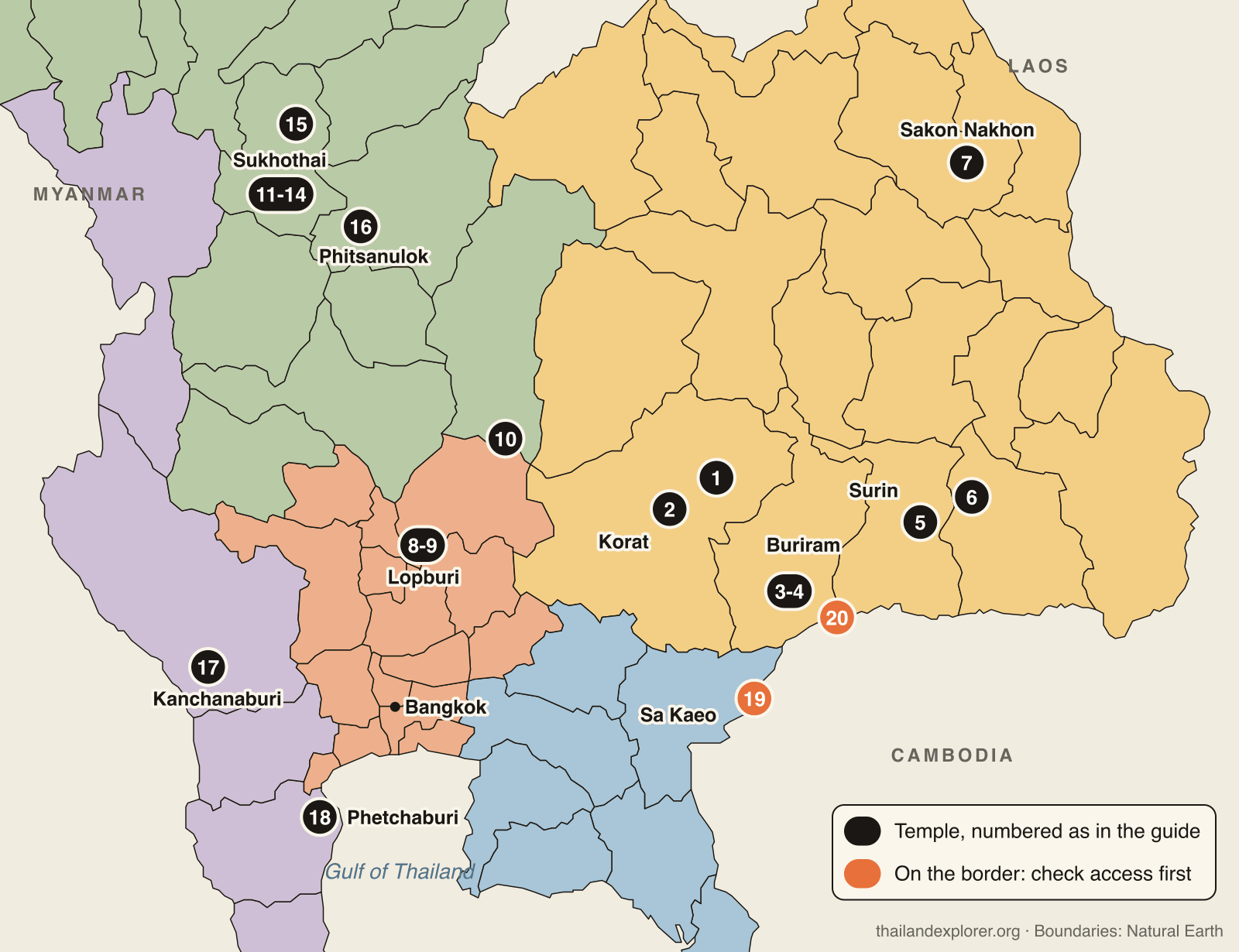
Map of the temples
The numbers on the map match the numbers in this guide. Where temples sit too close together to show apart, one marker carries a range, like 11-14 for old Sukhothai.
How to read a Khmer temple
Learn seven words and every stop gets easier to read.
- Prasat means a temple or sanctuary. You’ll see it in a lot of the names.
- Prang is the tower, shaped a bit like a corn cob. The main one stands over the central shrine.
- Lintel is the carved stone beam over a doorway. This is where the best carving usually is, so always look up before you walk through.
- Naga is the many-headed serpent. Its body often forms the railing of a bridge or causeway.
- Gopura is a gateway building in the wall around the temple.
- Baray is a reservoir. Water mattered to these temples, and Muang Tam still has its ponds.
- Linga is the stone symbol of Shiva that stood in the central shrine of a Hindu temple.
Look at what a temple is made of too. Sandstone takes fine carving. Laterite is the rough, reddish, pitted stone used for walls and bases, and it was usually covered in stucco. Brick came first at many sites. Most Khmer temples face east, so morning light is usually best for photos. A few break the rule, and I point those out.
Isan, the heartland
The big ones are here. If you only have time for one area, this is it. Our Khmer Temple Trail strings the first four into a week, with trains, buses and where to sleep.
1. Phimai
Phimai Historical Park (อุทยานประวัติศาสตร์พิมาย)
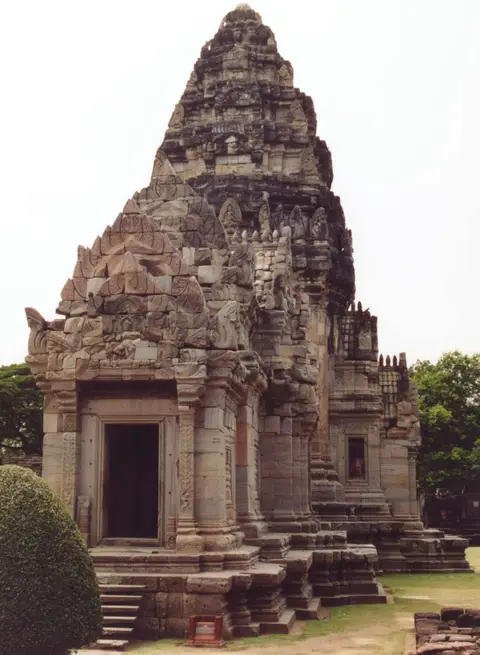
Phimai stands right in the middle of a small town, and it’s the largest ancient Mahayana Buddhist temple in Thailand. Most of it dates from the late 11th to the late 12th century. The walled area runs about 1,020 by 580 meters. Notice which way it faces: down the old road toward Angkor, not east like most. Walk in over the naga bridge and take your time with the main sandstone tower. Allow an hour and a half to two hours.
2. Phanom Wan
Prasat Hin Phanom Wan (ปราสาทหินพนมวัน)
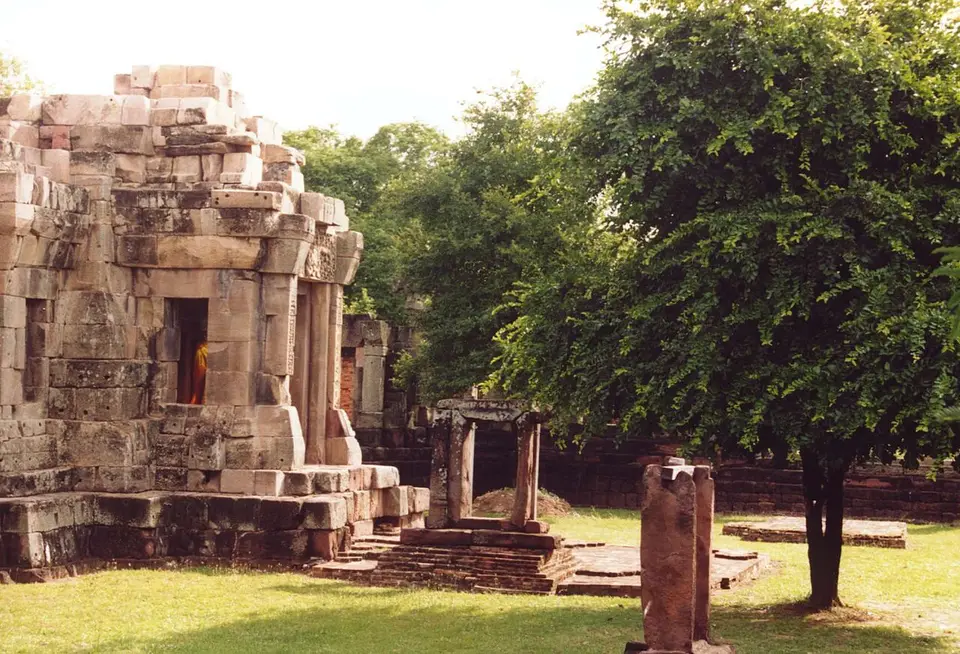
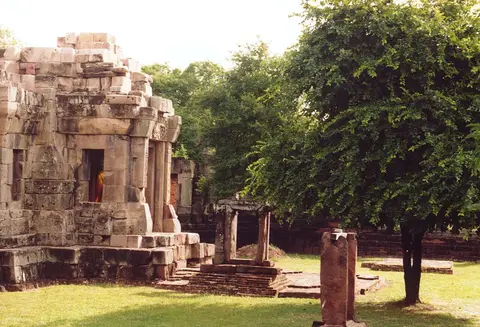
Phanom Wan is the quiet one, close to Korat. It’s believed to date from the 11th century, with older brick remains underneath, and it started as a Hindu temple before Buddhists took it over. Much of it is in ruins, but the main sandstone tower still stands and people still come here to pray. Allow about an hour.
3. Phanom Rung
Phanom Rung Historical Park (อุทยานประวัติศาสตร์พนมรุ้ง)
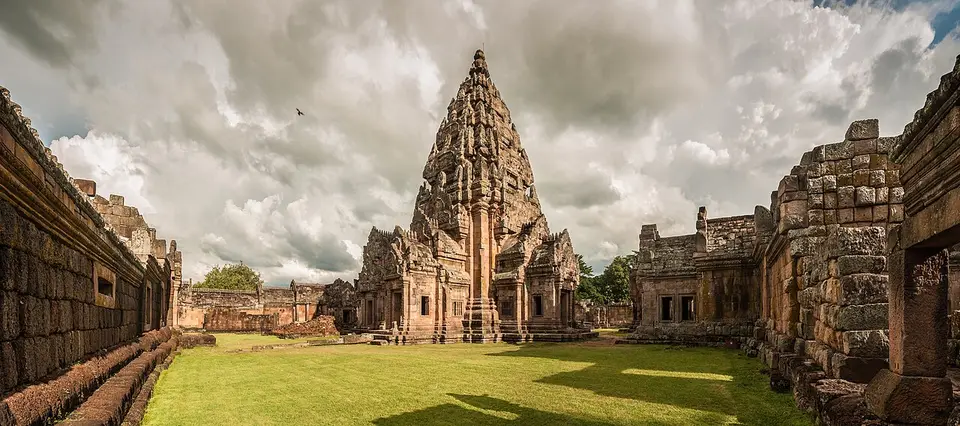
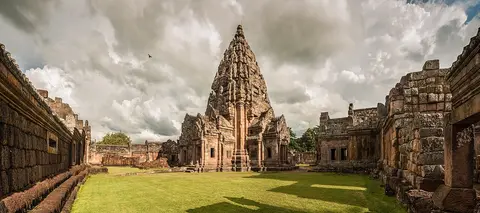
If you see one Khmer temple in Thailand, make it this one. Phanom Rung sits on the rim of an extinct volcano, 402 meters up, and it was built for Shiva between the 10th and 13th centuries. You walk up a long processional avenue, cross the naga bridges and climb to the sanctuary. Look closely at the lintels, because they’re carved with stories. Four times a year the sun shines straight through all 15 doorways. The dates move a little each year, so see the Trail guide before you plan around it. Allow an hour and a half to two hours.
4. Muang Tam
Prasat Muang Tam (ปราสาทเมืองต่ำ)
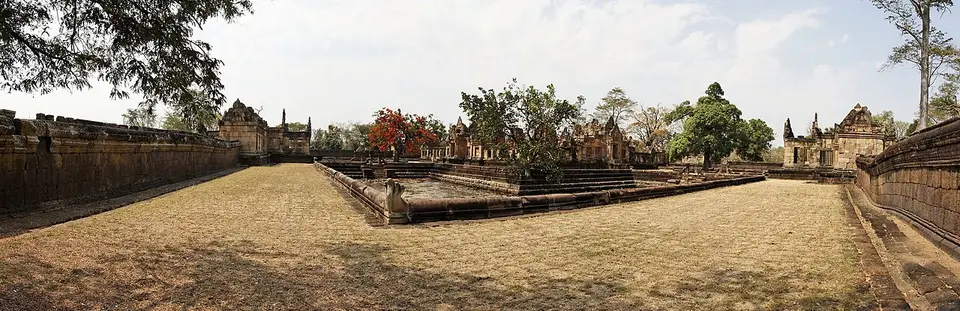
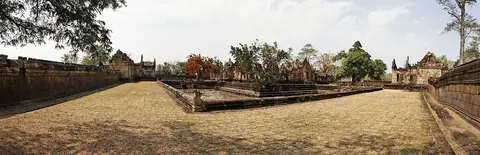
Muang Tam is about 8 km from Phanom Rung, down on the plain, and it’s the one I’d never skip. It dates from around the 11th century and was dedicated to Shiva. Five brick towers stand inside, and four L-shaped ponds wrap around them, edged with naga whose five heads rise at the corners. It gets far fewer visitors than Phanom Rung. See both on the same day. Allow an hour to an hour and a half.
5. Sikhoraphum
Prasat Sikhoraphum (ปราสาทศีขรภูมิ)
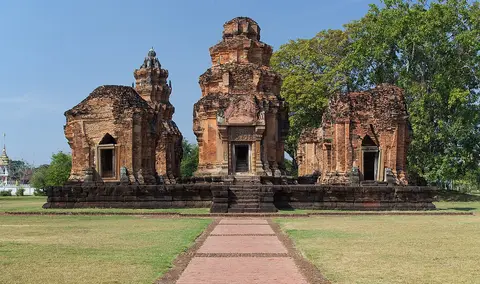
Sikhoraphum, in Surin, has five brick towers on one base and some of the finest carving in Thailand. It was built in the 11th or 12th century for Shiva, and Buddhists took it over later. Find the lintel of the dancing Shiva, then look for the devatas and door guardians carved beside it. Allow 30 minutes to an hour.
6. Sa Kamphaeng Yai
Prasat Kamphaeng Yai (ปราสาทสระกำแพงใหญ่)
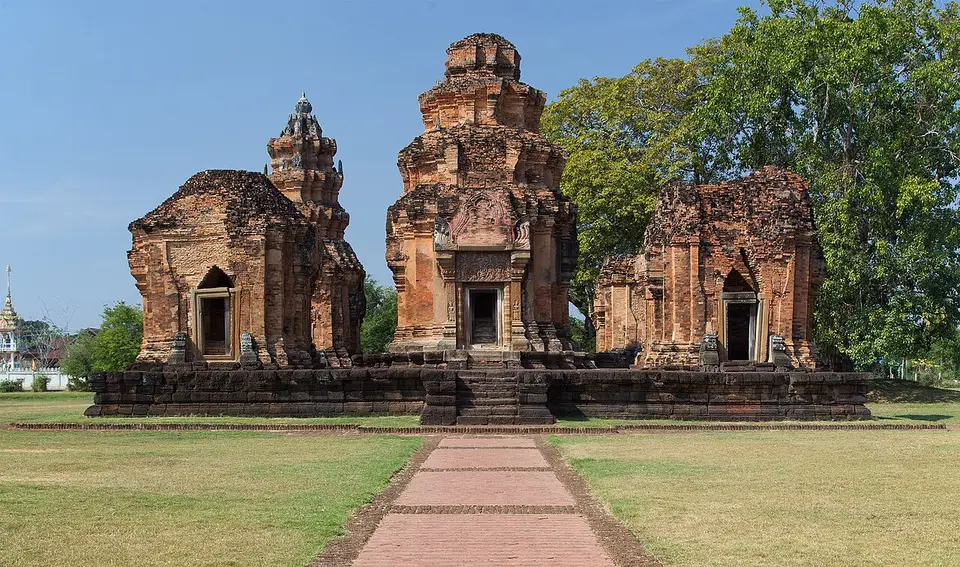
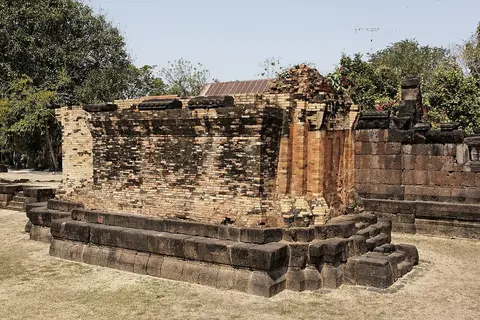
This 11th-century temple in Si Sa Ket stands inside a working Buddhist monastery, so you’ll see monks and worshippers alongside the ruins. It’s the largest and best preserved Khmer temple in the province, with towers on a shared platform, two libraries and a walled gallery around them. An inscription here records a land deal in 1042. The lintels are worth a slow look. Allow about an hour.
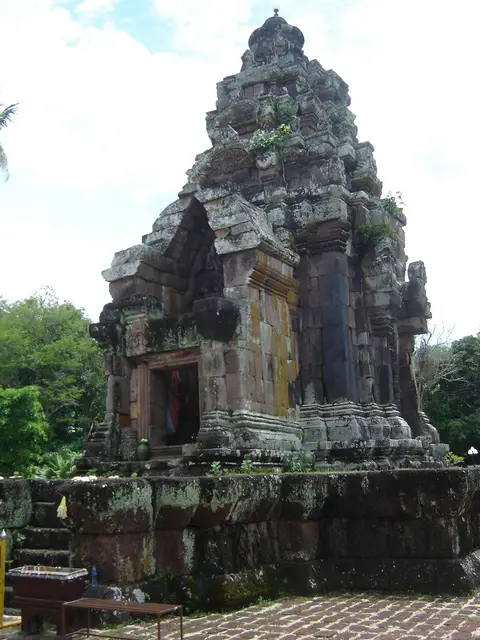
7. Narai Cheng Weng
Wat Phra That Narai Cheng Weng (วัดพระธาตุนารายณ์เจงเวง)
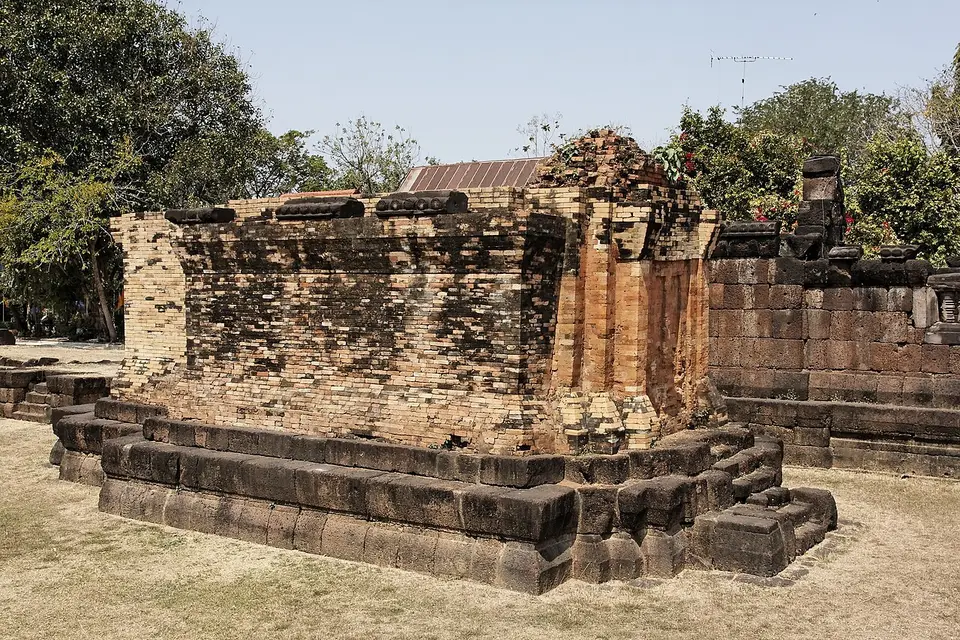
This one is far to the north, about five kilometers from Sakon Nakhon town. It’s a single sandstone tower on a laterite base, from around the 11th century, with a lintel of Krishna killing a lion. A local legend says women built it in a contest against the men. It’s a good story, but it’s a legend. Allow 20 to 40 minutes.
Lopburi and the central plain
Lopburi is the easiest place to see Khmer temples if you’re based in Bangkok. It’s on the northern rail line, and two of the temples are a short walk from the station. See our Thailand by Train guide for the trip.
8. Phra Prang Sam Yot
Phra Prang Sam Yot (พระปรางค์สามยอด)
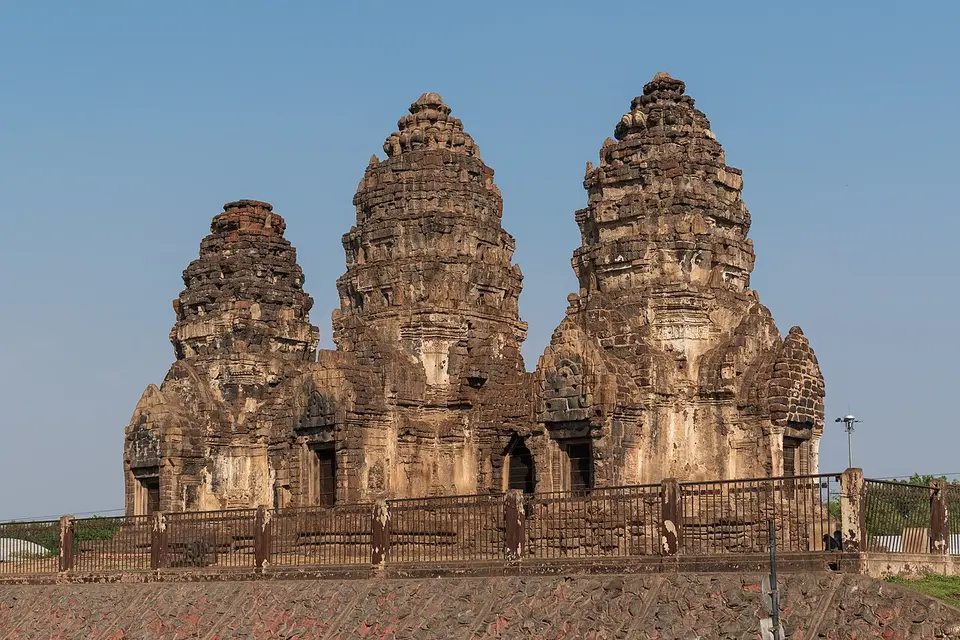
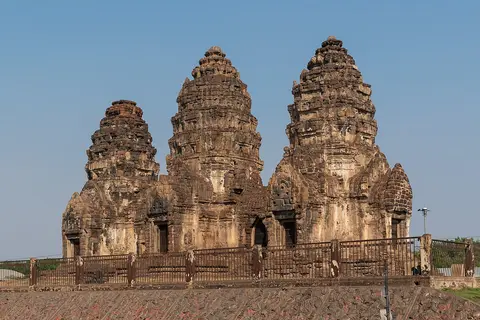
Three laterite towers joined by a passage, right in the middle of town. It dates from the late 12th or early 13th century and was Buddhist from the start. Look for the stucco and the carved door columns. Lopburi is known for its monkeys, and a smaller group still lives around the temple, so hold on to your phone and don’t carry food. Allow 20 to 40 minutes.
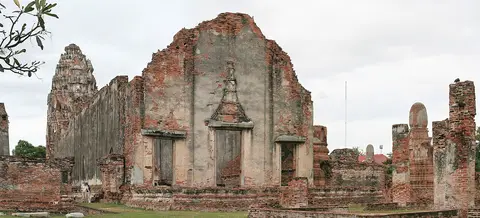
9. Wat Mahathat, Lopburi
Wat Phra Si Rattana Mahathat, Lopburi (วัดพระศรีรัตนมหาธาตุ ลพบุรี)
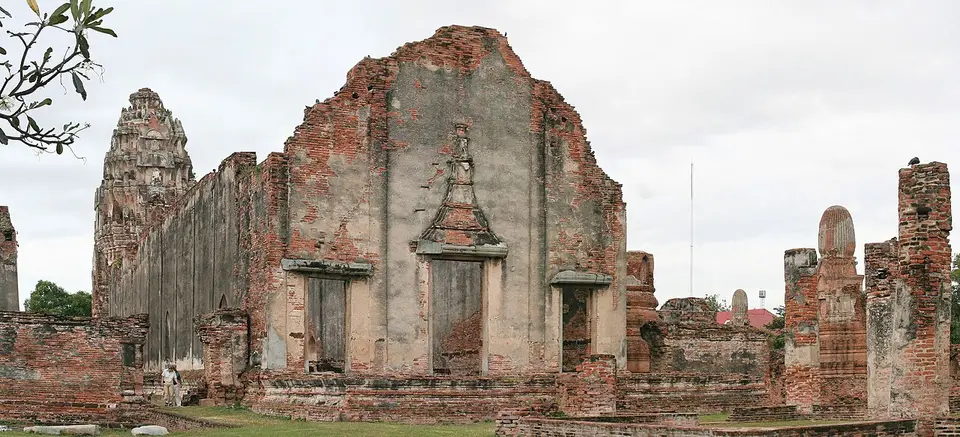
This big ruined monastery is right across from the railway station. The tall central tower shows Khmer influence and still has fine stucco, and the halls and chedis around it were added over later centuries. Nobody knows exactly when it was founded, so be wary of guides that give you a firm date. The grounds are large and usually quiet. Allow about an hour.
10. Si Thep
Si Thep Historical Park (อุทยานประวัติศาสตร์ศรีเทพ)
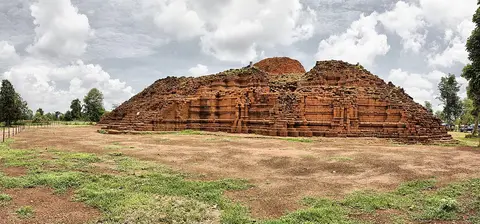
Si Thep, in Phetchabun, is a much older city that became a World Heritage site in 2023. That listing is for the older Dvaravati city, not for its Khmer tower. Still, inside the walls you’ll find Prang Si Thep, a brick tower on a laterite base from around the 11th to 12th century. It faces west, which is unusual. Come for the whole park and give it a few hours. The tower itself takes 30 to 45 minutes.
Sukhothai and the lower north
This is the part that surprised me. Sukhothai is famous as the first Thai capital, but several of its temples are older than the kingdom, and you can see three of them in a normal day at the park.
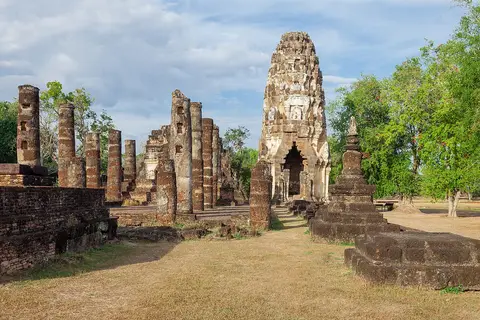
11. Wat Phra Phai Luang
Wat Phra Phai Luang (วัดพระพายหลวง)
Just north of the old city walls. Three towers once stood in a row here, from the late 12th or early 13th century, and one is still mostly standing with patches of stucco on it. The Buddhist halls and stupas around it came later. Allow an hour to an hour and a half.
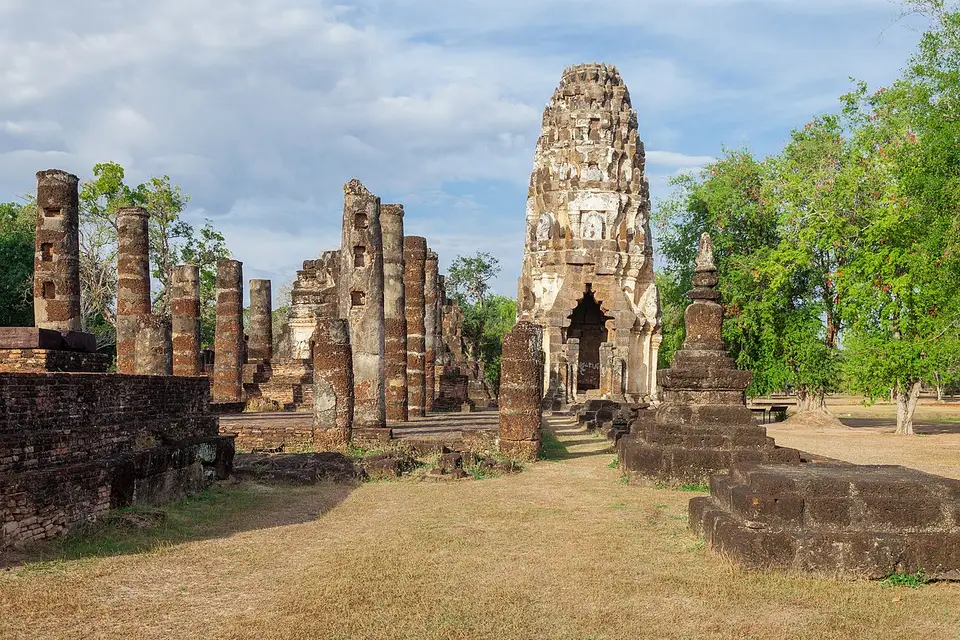
12. San Ta Pha Daeng
San Ta Pha Daeng (ศาลตาผาแดง)
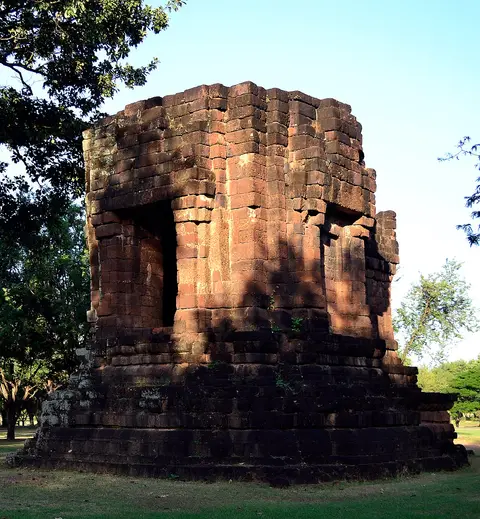
A small laterite Hindu shrine near the northern wall. Even the official sources disagree on its age, so call it 12th to early 13th century. The sculptures found here are in the Ramkhamhaeng National Museum nearby. It only takes 15 to 30 minutes, and it pairs well with Wat Phra Phai Luang.
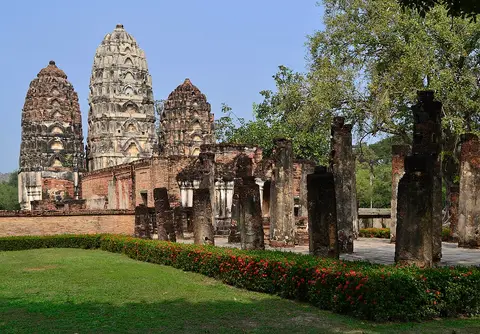
13. Wat Si Sawai
Wat Si Sawai (วัดศรีสวาย)
Three towers in the central part of the park that look nothing like the temples around them. The sanctuary started out Hindu in the late 12th or early 13th century and was folded into a Buddhist monastery later. The towers face south, and you can see where the laterite stops and the brick begins. Allow 30 to 45 minutes.
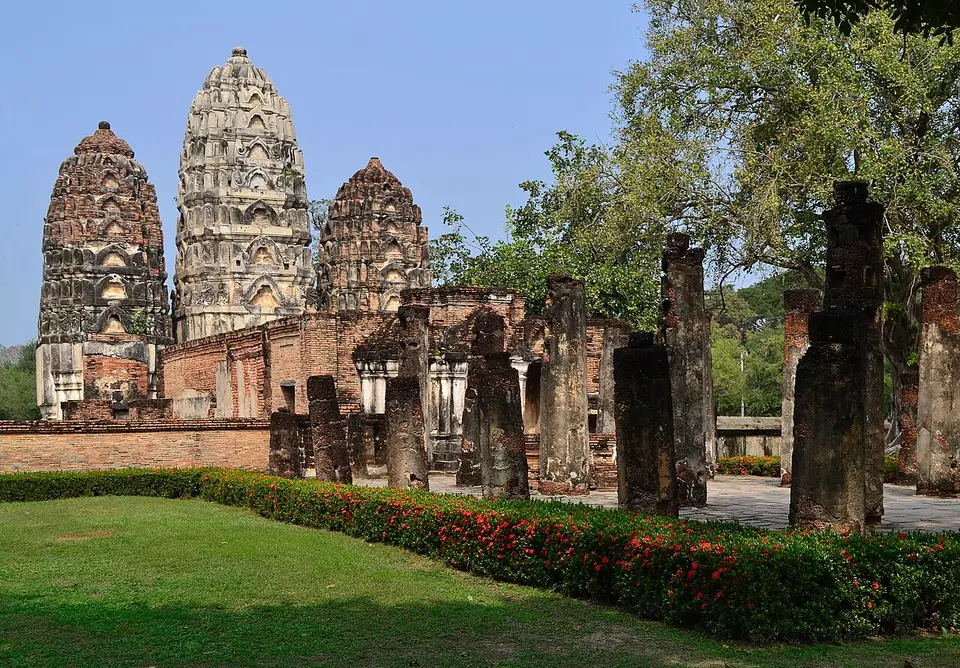
14. Prang Khao Pu Cha
Prang Khao Pu Cha (ปรางค์เขาปู่จ่า)
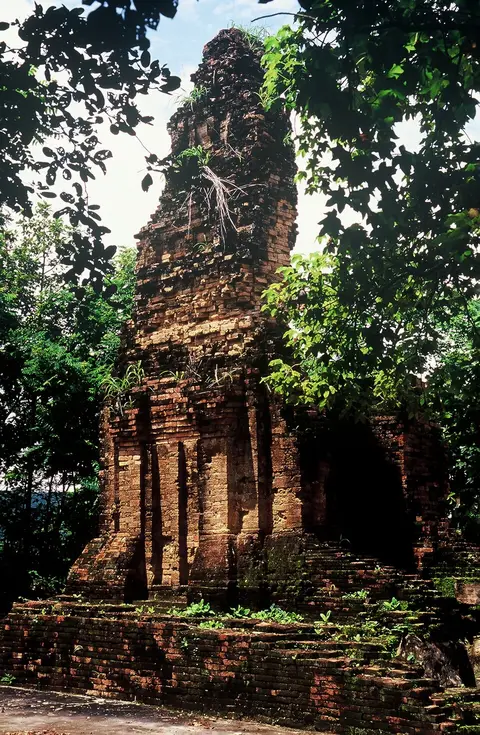
A small brick sanctuary on a hilltop in Khiri Mat district, south of the park. A Thai archaeological account puts the first building around the 11th century, which would make it one of the oldest here. The door faces east and the other three sides have false doors. I haven’t checked the path up or the parking, so ask locally before you go. Allow 30 minutes to an hour.
15. Wat Chao Chan
Wat Chao Chan (วัดเจ้าจันทร์)
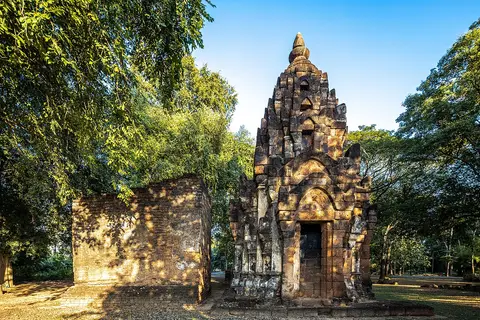
North of Sukhothai, in Chaliang beside Si Satchanalai. One laterite tower still stands, usually dated to the early 13th century. You’ll read that it was a royal rest house on the old road. That’s a theory. Chaliang’s big temple, Wat Phra Si Rattana Mahathat, is about 650 meters away. Allow 20 to 40 minutes.
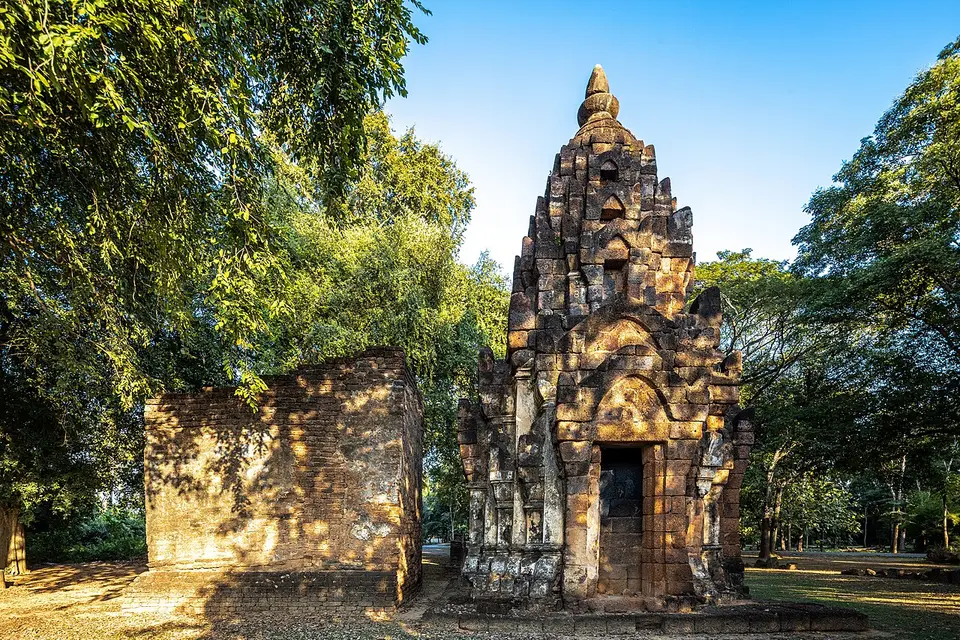
16. Wat Chulamani
Wat Chulamani (วัดจุฬามณี)
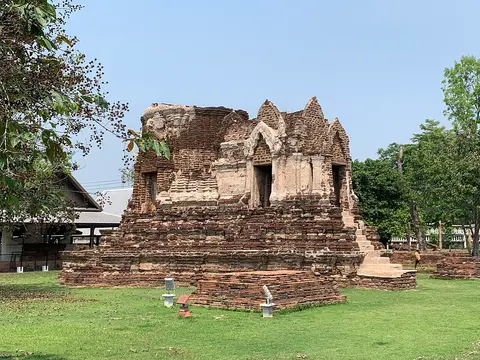
A working monastery on the Nan River, just south of Phitsanulok. Its laterite tower still has some of its carved stucco, which most towers this old have lost. Its age is argued about. King Borommatrailokkanat of Ayutthaya re-established the monastery in 1464 and is said to have become a monk here. Dress for a working temple. Allow 30 minutes to an hour.
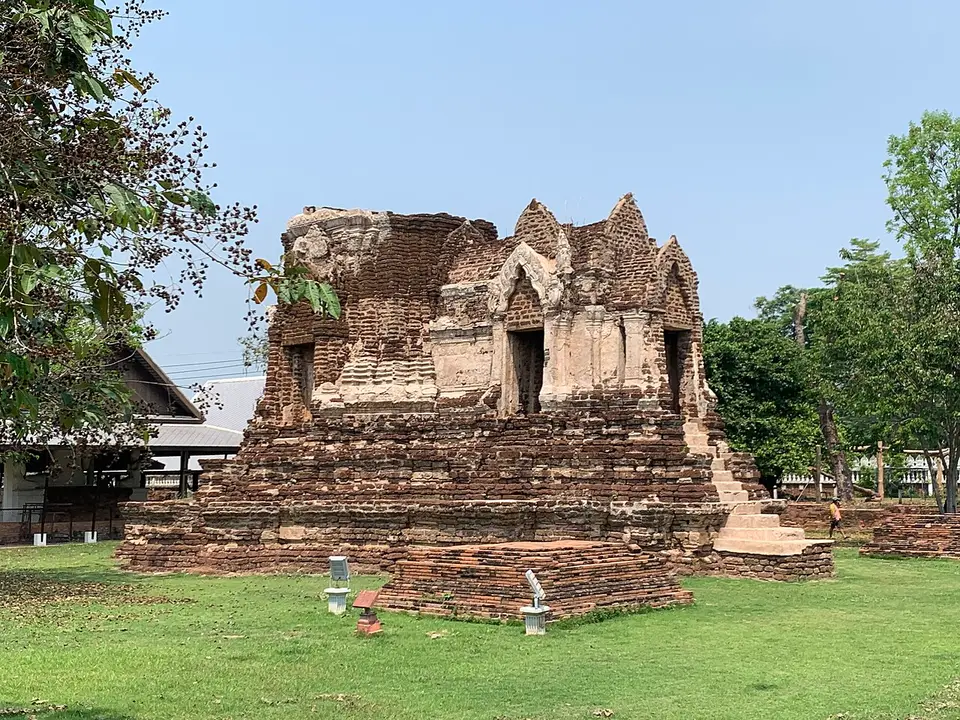
The far west and south
These two are a long way from Isan. I didn’t expect to find Khmer temples in either place.
17. Mueang Sing
Mueang Sing Historical Park (อุทยานประวัติศาสตร์เมืองสิงห์)
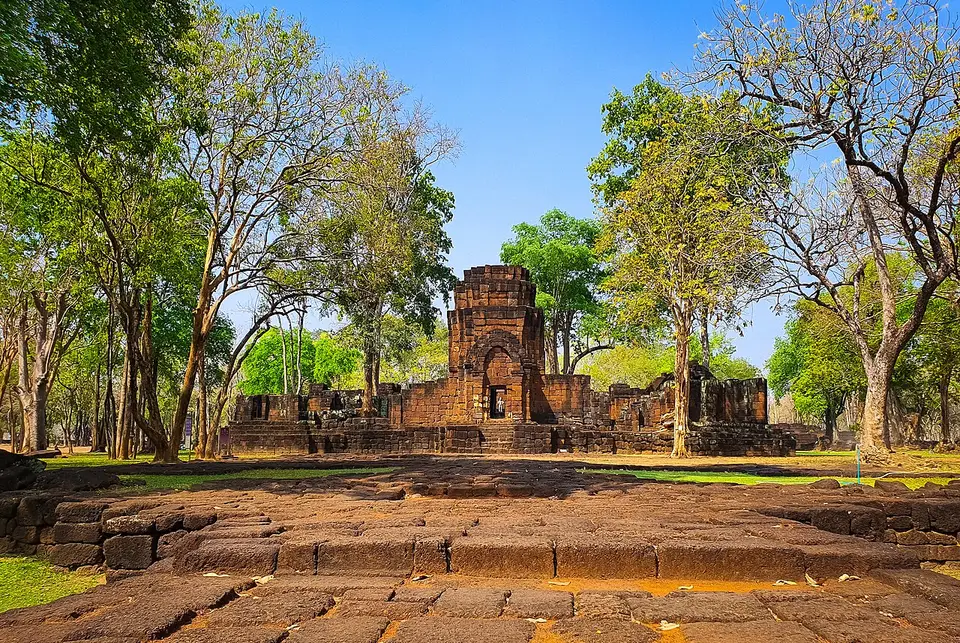
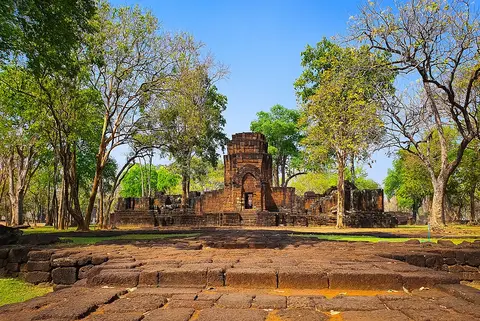
A walled Khmer-period town and temple beside the Khwae Noi River in Kanchanaburi. The laterite sanctuaries are usually dated to the late 12th or early 13th century and were Mahayana Buddhist. You can still follow the town walls. If you’re in Kanchanaburi for the River Kwai, this is an easy addition. Allow an hour to an hour and a half.
18. Wat Kamphaeng Laeng
Wat Kamphaeng Laeng (วัดกำแพงแลง)
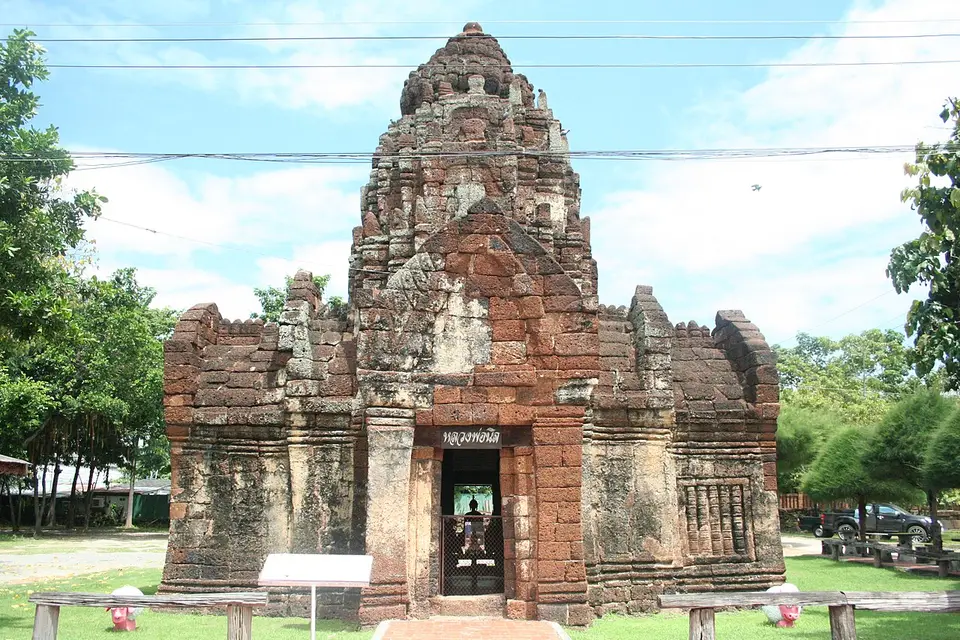
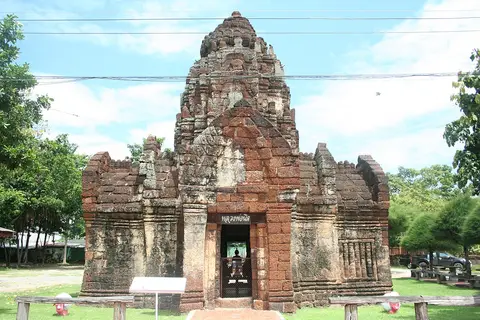
In Phetchaburi town, and one of the few Khmer temples this far south. Weathered laterite towers stand inside a working Buddhist temple. They’re usually dated to the late 12th or early 13th century, and sources disagree on which faith it first served. Dress for a working temple. Allow 30 to 45 minutes.
Along the border
Some of the most important Khmer temples in Thailand sit right on the border with Cambodia. Fighting broke out along that border in 2025, and the land border was still closed when I checked in November 2026. I’m including these because they matter, and you can decide for yourself. Please check the current situation before you plan a trip around any of them.
19. Sdok Kok Thom
Sdok Kok Thom (ปราสาทสด๊กก๊อกธม)
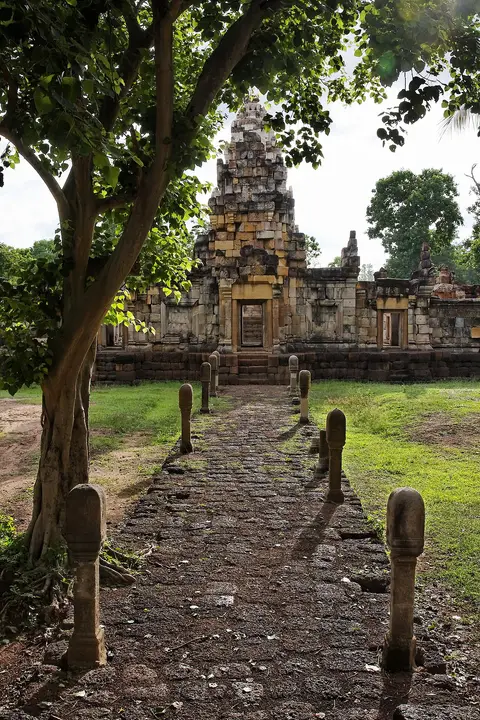
An 11th-century temple in Sa Kaeo, built for Shiva in red sandstone and laterite. Historians know it for one stone: an inscription found here, dated 1053, is one of the main written sources for the early history of Angkor. Access: it closed temporarily after the 2025 clashes, and I couldn’t confirm that it has reopened. Allow an hour to an hour and a half.
20. Ta Muen Thom
Prasat Ta Muen Thom (ปราสาทตาเมือนธม)
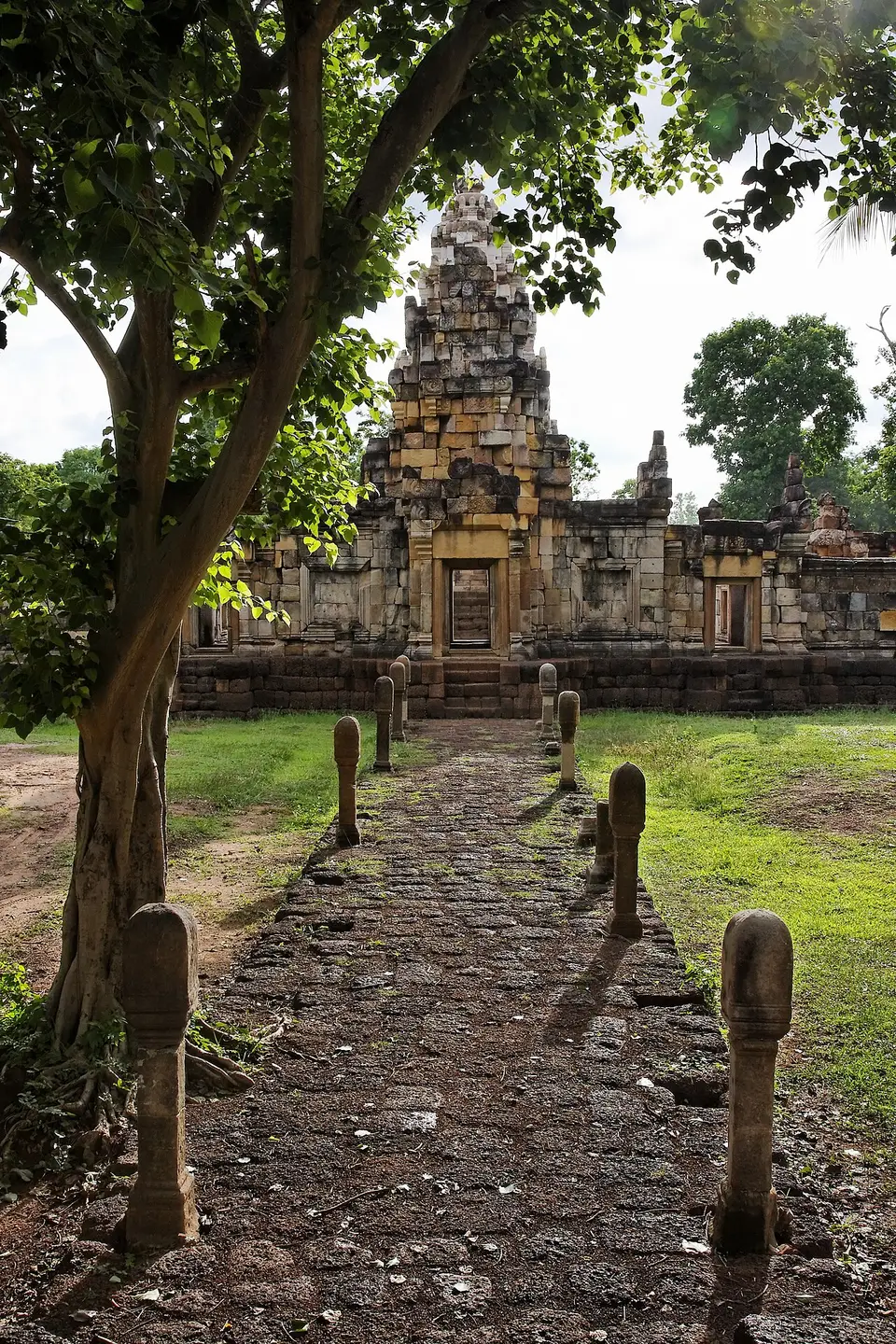
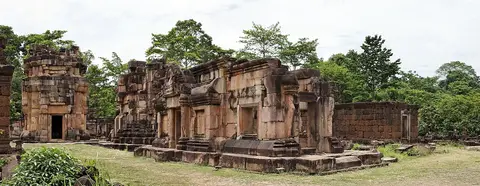
The largest of three temples that stand close together on a forested pass in the Dangrek Mountains, in Surin. The other two were a hospital chapel and a rest house chapel on the old Khmer road. Access: it was reported closed to visitors in November 2026.
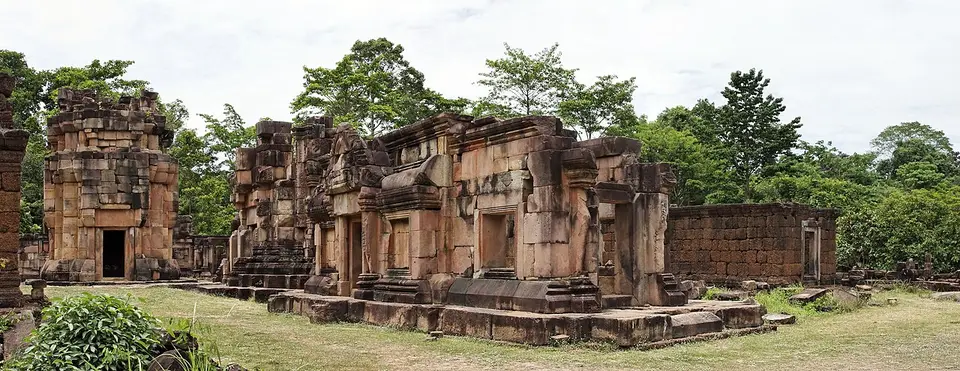
One more to know about is Prasat Ta Khwai, also called Ta Krabey, an unfinished 11th-century temple further along the same border. It was reported closed too, though Surin has opened it to visitors on a few announced days.
Hours and fees
These come from Tourism Authority of Thailand open data, checked between 2023 and 2025. Published prices don’t always agree, so use this to budget and bring cash for the gate.
| Temple | Listed hours | Foreigner fee |
|---|---|---|
| Phimai | From 07:30, closing 17:30 or 18:00 | Listed at 100 or 200 baht |
| Phanom Wan | 07:00 to 18:00 | Free |
| Phanom Rung | 07:00 to 18:00 | Listed at 100 or 200 baht |
| Muang Tam | 06:00 to 18:00 | 120 baht |
| Sikhoraphum | 08:00 to 16:30 | 50 baht |
| Sa Kamphaeng Yai | 08:30 to 16:30 | Free |
| Narai Cheng Weng | 06:00 to 17:00 | Not listed |
| Phra Prang Sam Yot | 08:30 to 18:30 | 50 baht |
| Si Thep | 08:00 to 16:30 | 100 baht |
I couldn’t confirm current hours or fees for the others, so I’ve left them out. Sukhothai Historical Park sells tickets by zone, and the prices quoted online run from 40 to 200 baht. The times I give for each temple are my rough estimates, not official figures.
If you have a day, three days or a week
- One day from Bangkok: take the train to Lopburi and see Phra Prang Sam Yot and Wat Mahathat on foot.
- Two or three days: go to Korat for Phimai and Phanom Wan. Or go straight to Buriram for Phanom Rung and Muang Tam, and read our Buriram guide for the rest of your time there.
- A week: follow the Khmer Temple Trail from Bangkok through Korat and Phimai to Buriram.
- Already going to Sukhothai: add Wat Si Sawai, Wat Phra Phai Luang and San Ta Pha Daeng to your park day.
- Already going to Kanchanaburi: add Mueang Sing.
All of these are places of worship or were, and several still have monks living in them. Read Thai etiquette before you go, cover your shoulders and knees, and go early before the heat.
Common questions
Where are the Khmer temples in Thailand?
Most are in Isan, the northeast, in Nakhon Ratchasima, Buriram, Surin and Si Sa Ket provinces. You'll also find them in Lopburi, Sukhothai, Phitsanulok, Phetchabun, Kanchanaburi, Phetchaburi, Sakon Nakhon and Sa Kaeo.
Which Khmer temple in Thailand should I see first?
Phanom Rung in Buriram, with Muang Tam on the same day. If you can't get to Isan, Phra Prang Sam Yot in Lopburi is an easy train ride from Bangkok.
Are the Khmer temples on the Cambodian border open?
Not reliably. In November 2026, Ta Muen Thom was reported closed because of the border conflict, and we couldn't confirm that Sdok Kok Thom had reopened. Check locally before you plan around either one.
Do I need to go to Cambodia to see Khmer temples?
No. Thailand has dozens, and the big ones, Phimai and Phanom Rung, are well restored and far less crowded than Angkor.
How many days do I need for the Khmer temples in Isan?
About a week covers Korat, Phimai, Buriram and Phanom Rung without rushing. Three days is enough for Phimai and Phanom Wan, or for Phanom Rung and Muang Tam.
Were all these temples Hindu?
No. Many were built for Shiva, but Phimai and Phra Prang Sam Yot were Buddhist from the start, and most of the others became Buddhist later.
Places in this guide
Mueang Sing Historical Park
อุทยานประวัติศาสตร์เมืองสิงห์
Phanom Rung Historical Park
อุทยานประวัติศาสตร์พนมรุ้ง
Phimai Historical Park
อุทยานประวัติศาสตร์พิมาย
Phra Prang Sam Yot
พระปรางค์สามยอด
Prang Khao Pu Cha
ปรางค์เขาปู่จ่า
Prasat Hin Phanom Wan
ปราสาทหินพนมวัน
Prasat Kamphaeng Yai
ปราสาทสระกำแพงใหญ่
Prasat Muang Tam
ปราสาทเมืองต่ำ
Prasat Sikhoraphum
ปราสาทศีขรภูมิ
Prasat Ta Muen Thom
ปราสาทตาเมือนธม
San Ta Pha Daeng
ศาลตาผาแดง
Sdok Kok Thom
ปราสาทสด๊กก๊อกธม
Si Thep Historical Park
อุทยานประวัติศาสตร์ศรีเทพ
Wat Chao Chan
วัดเจ้าจันทร์
Wat Chulamani
วัดจุฬามณี
Wat Kamphaeng Laeng
วัดกำแพงแลง
Wat Phra Phai Luang
วัดพระพายหลวง
Wat Phra Si Rattana Mahathat, Lopburi
วัดพระศรีรัตนมหาธาตุ ลพบุรี
Wat Phra That Narai Cheng Weng
วัดพระธาตุนารายณ์เจงเวง
Wat Si Sawai
วัดศรีสวาย
Thailand Explorer is a free guide to places across Thailand, from a family with a farm in Buriram. See it at thailandexplorer.org
Not sure where to go next?
Tap one button in the Thailand Explorer app. It picks a place, shows it on a map with a travel video, and lets you save it to your bucket list.
Get the iPhone app$4.99 once. No account, no subscription.