
Guide
Thailand by Train
Which station, which berth, when tickets open, and the routes worth your time
Download the PDFChecked November 2026. Latest version: thailandexplorer.org/guides/thailand-by-train
The train is rarely the fastest way around Thailand. You take it because you can climb into a real bed in Bangkok and wake up in the north. A seat by an open window costs next to nothing, and a few of these lines are worth riding just to ride them.
Three things catch people out: which Bangkok station your train uses, what time it actually gets in, and whether the line goes where you think it goes. I checked everything below in November 2026, and I’m giving you that date because this stuff changes. New train numbers and timetable changes came in on October 1, 2026, so look at the live listing before you commit to a time.

Is the train worth it?
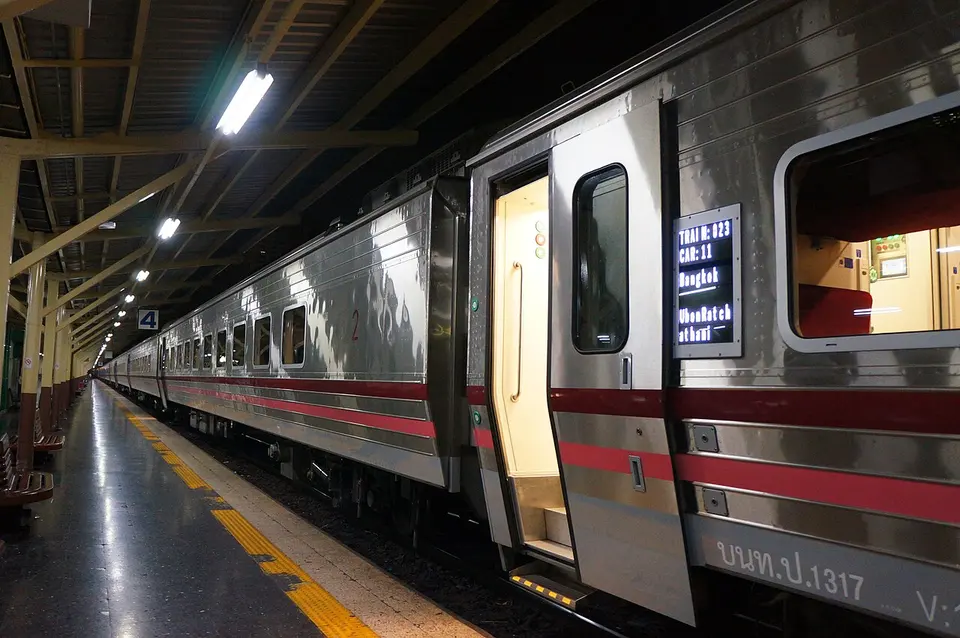
Take the train when the ride is part of the trip, or when a night on board saves you a hotel and a daytime of traveling. Fly if you’re short on time and Chiang Mai is just the next stop. If you only try it once, here’s what I’d book:
- One overnight sleeper: Chiang Mai if you want the classic, Ubon or Nong Khai if you want Isan.
- One cheap day ride: Ayutthaya, or the Mae Klong market line.
- The Kanchanaburi line, if the history of the Death Railway matters to you.
Where the lines go
Almost everything runs out of Bangkok like spokes on a wheel. There’s no cross-country train from Chiang Mai to the south, so a north-then-beach trip takes you back through Bangkok, or you fly that leg.
| Line | Main stops | Good for |
|---|---|---|
| Northern | Ayutthaya, Lopburi, Phitsanulok, Lampang, Chiang Mai | Old capitals and the classic sleeper |
| Northeastern, Ubon branch | Pak Chong, Korat, Buriram, Surin, Ubon Ratchathani | Isan temples, towns and food |
| Northeastern, Nong Khai branch | Pak Chong, Korat, Khon Kaen, Udon Thani, Nong Khai | Isan cities and the Mekong |
| Southern | Hua Hin, Chumphon, Surat Thani, Hat Yai | Beach towns and island gateways |
| Eastern | Chachoengsao, Pattaya | Short local rides |
| Kanchanaburi | Kanchanaburi, River Kwai Bridge, Nam Tok | War history and river scenery |
| Mae Klong | Wongwian Yai, Mahachai, Ban Laem, Mae Klong | Fishing towns and the railway market |
Bangkok’s stations
Get this wrong and you can miss your train. Bangkok has several stations, and they aren’t interchangeable.
| Station | What leaves from it |
|---|---|
| Krung Thep Aphiwat Central Terminal | All long-distance trains, plus the Bangkok Connex to Ayutthaya |
| Hua Lamphong | Local trains to Ayutthaya and Pattaya, third-class trains such as No. 262 to Hua Hin, and the weekend Kanchanaburi excursion |
| Thonburi | The daily local trains to Kanchanaburi and Nam Tok |
| Wongwian Yai | Local trains to Mahachai, the first leg to Mae Klong |
| Don Mueang | Not a starting point. Many northern and northeastern trains call here about 17 minutes after leaving Krung Thep Aphiwat, which helps if you’re coming from that airport |
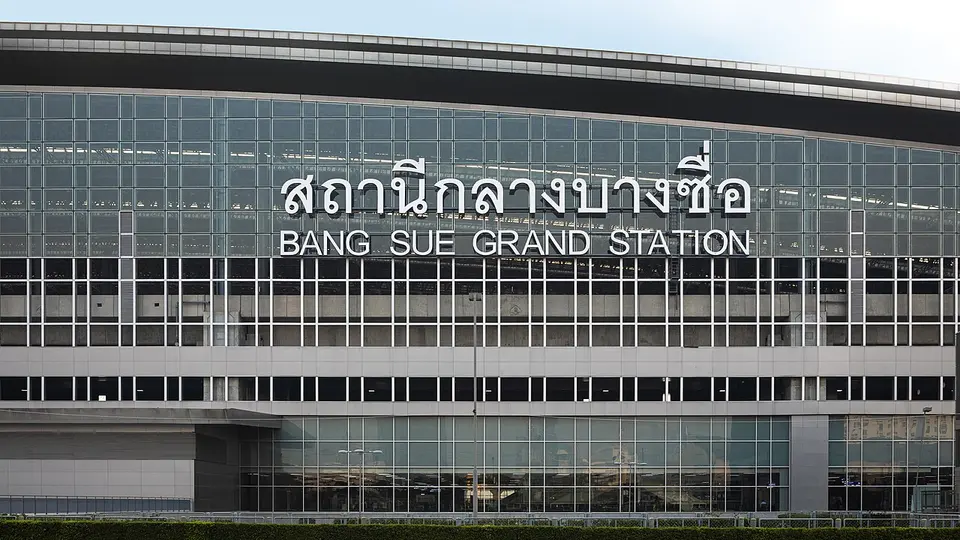

Getting to Krung Thep Aphiwat: take the MRT Blue Line to Bang Sue. From Hua Lamphong the whole trip takes about 50 minutes by metro for 43 baht, or about 25 minutes by taxi for around 130 baht, traffic permitting.
When to arrive: I’d get there 45 to 60 minutes early the first time, because it’s a big building. Platforms open only about 20 minutes before departure, and the screens don’t show platform numbers, so ask staff and listen for your train.
If a reseller’s page lists a long-distance train from Hua Lamphong, the page is out of date. I found a few of those while checking this guide.

Classes and which one to book
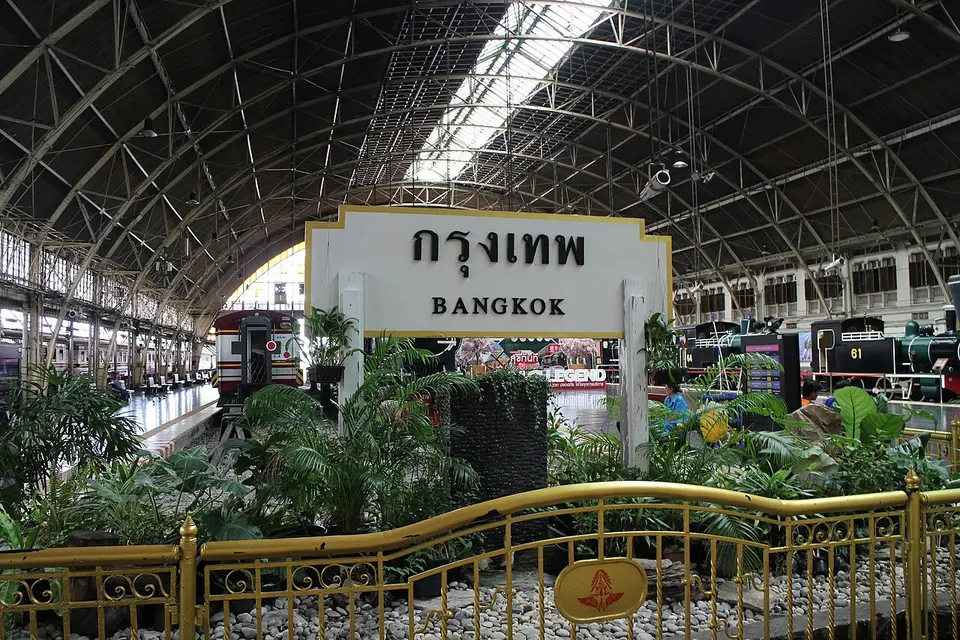
“Second class” alone doesn’t tell you whether you get a bed. Check whether the ticket says seat or sleeper.
- First-class sleeper: a two-berth compartment with a door. One ticket buys one berth, so a solo traveler can end up sharing with a stranger of the same gender unless you pay the single-use fare. Two people traveling together should book the upper and lower in the same compartment. Toilets are down the corridor, even in first. The newer cars have a hot shower.
- Second-class sleeper: an open carriage where facing seats turn into a lower bed and an upper bed folds down above. The attendant makes up the beds and you get a pillow, blanket and curtain.
- Second-class seat: fine for a day trip when you want air-conditioning.
- Third class: fan and open windows, usually no reservation. It’s great for an hour or two and hard work overnight.
My pick is a second-class lower berth. It’s wider than the upper, there’s no climbing, and you keep the window. The upper is a bit cheaper, narrower, and has no window once the beds are down.
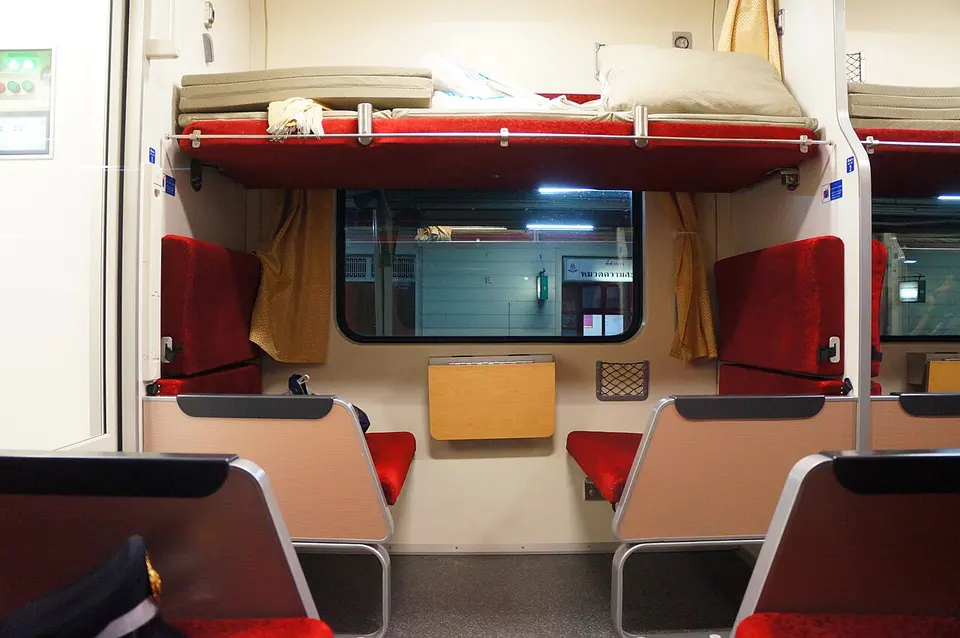

Look for the newer sleepers. The Chinese-built cars on trains 9/10 (Chiang Mai), 23/24 (Ubon), 25/26 (Nong Khai) and 31/32 (Hat Yai) are the ones to look for. The booking system may call them “Special Express CNR”. Older cars can get swapped in, so the number is a good sign, nothing more.
How to book
Start with D-Ticket, the State Railway’s own site and app. It has an English version, and you can download your ticket, so there’s no pickup to worry about. Use each traveler’s real name and passport details, and check the station, date, carriage and berth before you pay.
If D-Ticket won’t take your card, use 12Go or Baolau. Both cost more than the station fare. 12Go needs at least three days’ notice. Sometimes it emails an e-ticket, and sometimes you have to collect a paper ticket at least an hour before departure from a pickup point that isn’t at the station. Recent customer reviews complain about exactly this, so read the delivery instructions before you pay. Baolau can show a train as sold out when seats remain, so compare before giving up.
At the station: you can buy at the window too, and it’s the only way to buy ordinary and local trains, which take no reservations.
When tickets open
Since April 2026, the most you can book ahead is 90 days. Plenty of guides still say six months. The window depends on how much of the train’s full route you’re riding:
| Share of the route you ride | Tickets open |
|---|---|
| 60% or more (Bangkok to Chiang Mai on a Chiang Mai train) | 90 days ahead |
| 25% to 59% | 30 days ahead |
| Under 25% (Bangkok to Ayutthaya on a Chiang Mai train) | The day before |
For the New Year 2027 trains, sales opened at 8:30am. So your Ayutthaya stop on a long-distance train can’t be booked in advance, and a mid-route ride may look unavailable when it just hasn’t opened yet.
If your search comes back empty
It doesn’t always mean sold out. Check these first:
- You searched “Bangkok” when your train leaves from Krung Thep Aphiwat, or the reverse.
- Your date is outside the booking window for that share of the route.
- The train is an ordinary one, sold only at the station.
Book these early
Lower berths on train 9 usually sell out one to two weeks ahead, and further out from November to February. First class goes quickly too, since many trains carry only one first-class car. New Year and Songkran are the busiest dates. For a day train to Ayutthaya or Kanchanaburi you can usually just turn up.
Changes and refunds
Don’t assume you can change or refund a ticket. Read the conditions shown on your ticket before you pay. If you use an agent, their fee is a separate thing from the railway’s rules.
What it costs
These are one-way station fares in baht, rounded. Some date from older published tables, so use them to budget, and check the live price when you book. Agents add a fee on top.
| From Bangkok | Second-class sleeper (upper / lower) | Seat |
|---|---|---|
| Chiang Mai (No. 9) | about 940 / 1,040 | Air-con seat on No. 7, about 560 |
| Ubon Ratchathani (No. 23) | about 880 / 980 | |
| Nong Khai (No. 25) | about 890 / 990 | |
| Surat Thani | up to about 900 / 1,000 | |
| Chumphon | about 660 / 730 | |
| Hat Yai | about 1,000 / 1,100 | |
| Hua Hin (No. 43) | Air-con seat about 330 | |
| Buriram (No. 21) | Air-con seat about 390 | |
| Ayutthaya (Bangkok Connex) | 50 | |
| Kanchanaburi (ordinary train) | 100, flat fare for foreigners |
First class on the Chiang Mai sleeper runs about 1,450 to 1,650 baht. Budget separately for getting to the station, food, and any bus or ferry at the far end. A cheap train fare doesn’t mean a cheap trip to an island.
Children: under 4 and under 100 cm ride free, ages 4 to 11 or under 150 cm pay a reduced fare, and 12 and over or over 150 cm pay full fare.
The routes worth riding
Bangkok to Chiang Mai
This is the one everybody means when they say the night train, and the timing works.
| Train | Leaves | Arrives | Notes |
|---|---|---|---|
| No. 9 sleeper | 18:40 | 07:15 | Newer cars, my first choice |
| No. 13 sleeper | 20:05 | 08:40 | Older cars, a little cheaper |
| No. 7 day railcar | 07:30 | 17:50 | Seats only. Bring food, as railcars no longer include meals |
Skip the 14:15 sleeper unless you’re happy to arrive around 4am. If scenery is why you’re going, a day train shows you far more of the line. That includes the hills north of Lampang and the Khun Tan Tunnel, the longest railway tunnel in Thailand at about 1.35 km. It took from 1907 to 1918 to finish.
Stops on the way can catch you out at night. Sleeper No. 9 reaches Phitsanulok at 00:15 and Lampang at 04:57. For Phitsanulok, the 09:05 day railcar arrives at 13:12, which is much kinder.
Isan: the Ubon branch
Isan is where I’d send you if you’ve already done Chiang Mai. Buriram is close to my heart because our family farm is in the province. The catch is the sleeper timing. Train 23 is a good train, but it reaches the middle of this branch at an awful hour:
| To | Sleeper No. 23, leaves 21:05 | Day train No. 21, leaves 06:10 |
|---|---|---|
| Buriram | Arrives 03:31 | Arrives 11:34 |
| Surin | Arrives 04:13 | Arrives 12:09 |
| Ubon Ratchathani | Arrives 06:40 | Arrives 14:00 |
My advice: take the sleeper only if you’re riding all the way to Ubon. For Buriram or Surin, take No. 21 in the morning. It has air-conditioned seats and it sells out first, so book when you can. Express No. 71 is the backup, leaving at 10:35 and reaching Buriram at 16:14.
Ubon’s station is in Warin Chamrap, south of the city, so plan a short ride at the end. Buriram’s station is about 1 km from the center. See my Buriram guide for what to do once you’re there.
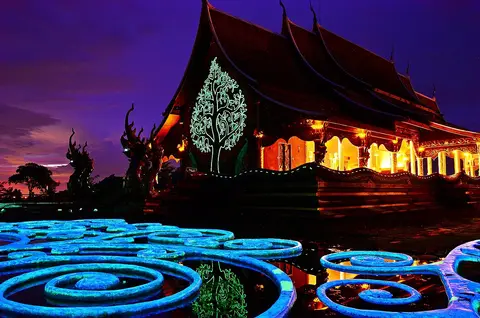
If you can pick your month, July gives you a good reason to ride the whole branch. Ubon’s Candle Festival parades huge carved beeswax candles through the city at the start of Buddhist Lent. The date follows the lunar calendar, so look it up for your year.
Isan: the Nong Khai branch
| To | Sleeper No. 25, leaves 20:25 | Day railcar No. 75, leaves 08:45 |
|---|---|---|
| Khon Kaen | Arrives about 04:10 | Arrives 15:30 |
| Udon Thani | Arrives 05:39 | Arrives 16:55 |
| Nong Khai | Arrives 06:25 | Arrives 17:30 |
Same pattern here. The sleeper suits Nong Khai and Udon, and the day railcar suits Khon Kaen.
Pak Chong for Khao Yai
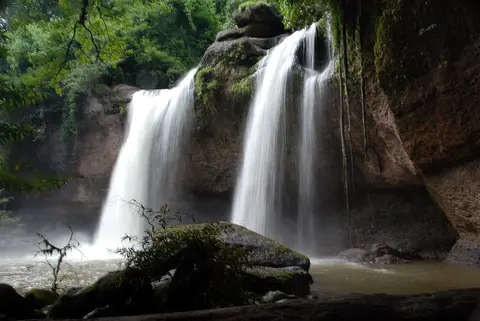
Khao Yai National Park makes a short, easy train trip, since Pak Chong comes before the line splits at Korat. Take a morning train, because the night trains get in late and you still have a ride to the park.
| Train | Leaves Krung Thep Aphiwat | Arrives Pak Chong |
|---|---|---|
| No. 21, air-con seats | 06:10 | about 08:50 |
| No. 135, second and third class | 07:10 | about 10:50 |
| No. 71, express | 10:35 | about 13:20 |
Listings on 12Go run from about 135 to 350 baht. Pak Chong is only part of the route, so seats open about 30 days ahead.
The station is just the start. From town, the park bus and songthaews run to the northern gate. The park bus comes about every 30 minutes and costs 15 baht. The visitor center is another 14 km past the gate, too far to walk, so you’ll want a scooter, a driver or a day tour from town. The gates are open from 06:00 to 18:00, and I’d plan to be back in town before they close.
Ayutthaya and Lopburi
Ayutthaya is the easiest first train ride in Thailand. There are three ways to do it:
- Bangkok Connex: a direct air-conditioned service that started in August 2026. It leaves Krung Thep Aphiwat at 09:05 daily (plus 08:05 on weekends), takes about 75 minutes and costs 50 baht. Trains come back at 15:00, 17:55 and 19:50. Buy at the station. Seats aren’t reserved.
- Long-distance trains from Krung Thep Aphiwat: third class is about 20 baht, and bookable seats only open the day before.
- Ordinary trains from Hua Lamphong: about 15 to 20 baht and slower, roughly 1.5 to 2 hours.
For Lopburi, check which station your train uses. Since December 2025, long-distance trains stop at Lopburi 2 (Tha Wung), outside the old town where the monkeys and the temples are.
Kanchanaburi and the River Kwai line
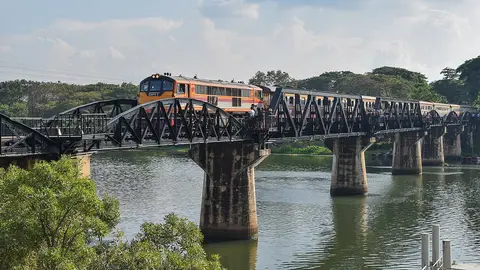
This line was built by prisoners of war and forced laborers during World War II, and you ride over the River Kwai Bridge on your way up the valley.
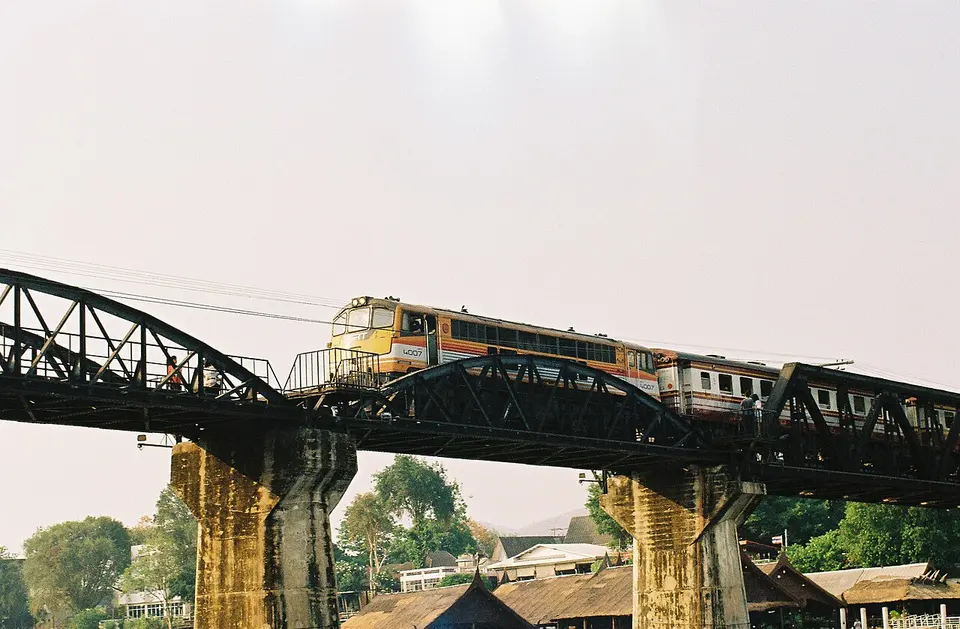

- Daily local trains from Thonburi: No. 257 leaves at 07:45, reaches Kanchanaburi about 10:30, the bridge at 10:37 and Nam Tok at 12:05. No. 259 leaves at 13:55. Foreigners pay a flat 100 baht. You buy at the window on the day, there are no reservations, and it’s third class with open windows.
- Back to Bangkok: No. 260 leaves Kanchanaburi at 07:05 and No. 258 at 14:43.
- Weekend excursion No. 909: Saturdays, Sundays and public holidays from Hua Lamphong at 06:30, back in Bangkok at 19:25. It costs 120 baht return in a fan car or 240 with air-conditioning. Book on D-Ticket, as it fills early.
Floods closed part of the line above Kanchanaburi in late September 2026, and reports differ on how far it has reopened. Call 1690 or ask at the station before you plan on riding to Nam Tok, especially in the rainy season.
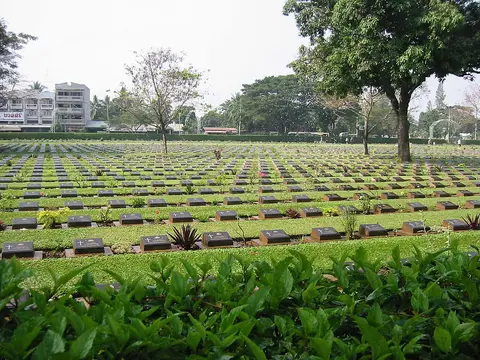
I’d stay a night in Kanchanaburi. The railway, the museums and the war cemetery are a lot to fit into one day from Bangkok.
The Mae Klong market line
This is the line where vendors pull back their awnings so the train can squeeze through the market. Getting there takes two trains and a boat.
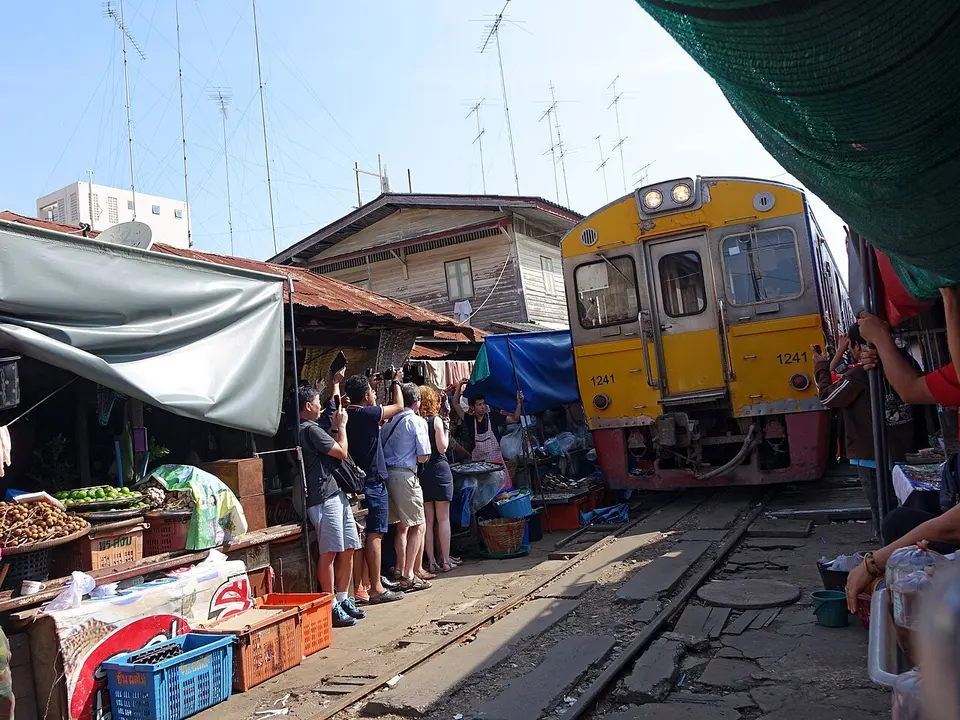

- Wongwian Yai to Mahachai, about an hour, 10 baht. Trains run about hourly.
- A five-minute ferry across the river, 3 baht.
- Ban Laem to Mae Klong, about an hour, 10 baht. Only four trains a day: 07:30, 10:10, 13:30 and 16:40.
The 07:40 from Wongwian Yai gives you time to wander around Mahachai’s seafood market before the 10:10. Trains head back from Mae Klong at 11:30 and 15:30. You buy tickets on the day. That second leg is the one to plan around, because missing it can cost you hours. Amphawa is close by if you want to stay on.
Hua Hin
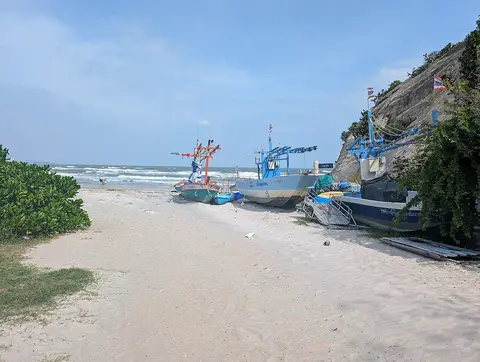
Hua Hin is a straightforward beach trip. No. 43 leaves Krung Thep Aphiwat at 07:30 and arrives at 10:31 with air-conditioned seats. The cheap option is third-class No. 262 from Hua Lamphong, with no reservation needed. Most southbound sleepers pass through in the evening or late at night, so check the arrival time first.
The floating train
This seasonal excursion crosses the Pa Sak Jolasid reservoir on a long viaduct, so it looks like you’re riding over the water. It runs on selected dates from November 2026 to January 2027, at 350 baht return in third class or 650 with air-conditioning. Packaged day tours start at 2,599 baht. Last season it left Hua Lamphong at 06:00, but check this season’s dates and station on D-Ticket, where you book it.
Where the train doesn’t go
Plenty of famous places have no station. For these, the train gets you only part of the way.
| Destination | Ride the train to | Then |
|---|---|---|
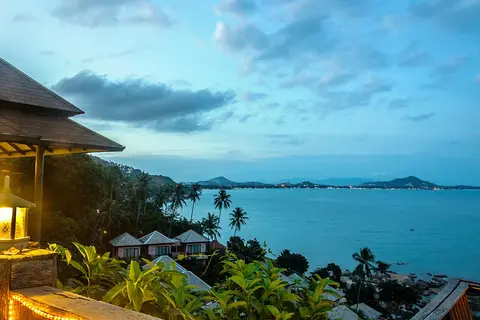
| Ko Samui | Surat Thani | Minivan to Don Sak pier and ferry, about 420 to 750 baht |
| Ko Phangan | Surat Thani | Minivan and ferry |
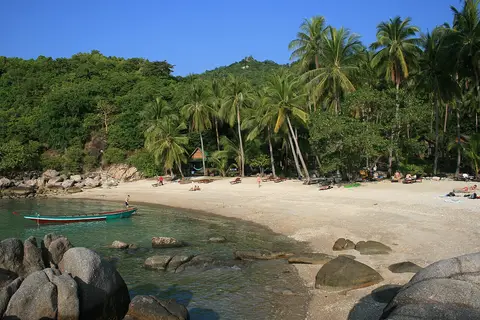
| Ko Tao | Chumphon | Minivan to the pier and ferry, about 900 baht |
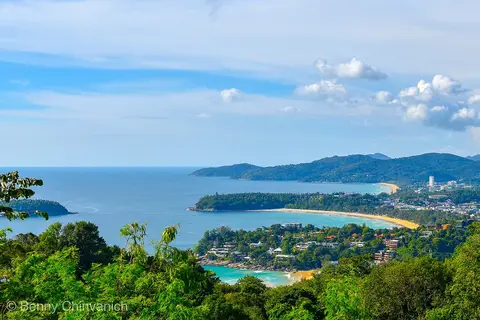
| Phuket | Surat Thani | Minivan, about 300 baht |
| Krabi | Surat Thani | Minivan, about 290 baht |
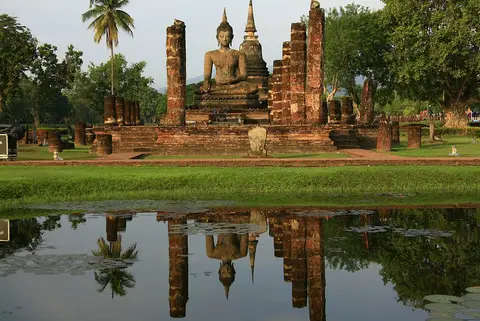
| Sukhothai | Phitsanulok | Bus, about an hour |
| Chiang Rai | Chiang Mai | Bus |
Those onward prices come from published tables and aren’t live quotes.
Surat Thani’s station isn’t in Surat Thani. It’s at Phun Phin, 14 km from town, and the Don Sak pier is about 60 km away. Chumphon’s station is in town, with the Ko Tao pier about 26 km off.
Watch the southern arrival times as well. Many Chumphon sleepers get in between 22:17 and 04:20, so match your train to the first ferry you can actually use. For Surat Thani, the evening trains that arrive between about 06:40 and 08:03 are the ones I’d look at, and the 07:30 day railcar gets in around 15:50.
Life on board
- Cold air: air-conditioned cars run cold all night. Bring a warm layer, as the blanket may not be enough.
- Food: key trains have a restaurant car with set meals around 150 to 200 baht, and vendors sell fruit and drinks on most trains. Railcars no longer include food. Bring water and something to eat and it won’t matter which train you got.
- Alcohol: banned on trains and in stations since 2014.
- Toilets and washing: expect shared toilets at the end of the car, western and squat in the modern second-class cars. Pack your own tissue for older cars.
- Power: the newer cars have sockets. Carry a power bank for everything else, and don’t count on steady phone signal.
- Bags: you keep them with you. The rule is one large suitcase and a smaller item, though it’s not strictly enforced. Keep your passport, money and medicine in your berth.
Delays and connections
Trains can run an hour or two late, and the timetables can’t always absorb that. You can see where your train is on TTS TrainView. The State Railway’s 1690 hotline works from inside Thailand.
Leave room in your plans:
- Don’t book the last ferry of the day after a train.
- At Surat Thani, allow three to four hours between the train and a separately booked minivan.
- Spend the night in Bangkok before an international flight. I wouldn’t trust a sleeper to get me to the airport the same morning.
Three trips to steal
The classic, about a week. Bangkok, a Connex day trip to Ayutthaya, then sleeper No. 9 to Chiang Mai, and stay a few days. Fly back if you’re short on time.
Isan by train, about a week. No. 21 from Bangkok to Buriram, then on to Surin and Ubon on the same line by day, with the sleeper back to Bangkok from Ubon.
History and markets, about five days. Mae Klong as a day trip from Bangkok, then the morning train from Thonburi to Kanchanaburi, with a night or two there and a ride up the line if it’s running.
Common questions
Which Bangkok station do trains to Chiang Mai leave from?
Krung Thep Aphiwat Central Terminal, not Hua Lamphong. All long-distance trains moved there in January 2023. It's about 7 km north of Hua Lamphong and is on the MRT Blue Line.
How far ahead can I book Thai train tickets?
It depends how much of the train's route you ride. Since April 2026, trips covering 60% or more of the route open 90 days ahead, 25% to 59% open 30 days ahead, and anything shorter opens the day before. Older guides that say six months are out of date.
Is first class worth it on a Thai sleeper?
Only if you want a door that closes. A second-class lower berth gets you a real bed, bedding and a curtain for much less, and it arrives at the same time as first class.
Can I take a train to Phuket, Krabi or Ko Samui?
Not all the way. The closest rail stop for all three is Surat Thani, and then you need a minivan, plus a ferry for Samui. Ko Tao is usually reached through Chumphon.
How much is the night train from Bangkok to Chiang Mai?
On sleeper No. 9, a second-class berth was about 940 baht upper and 1,040 baht lower at station prices, and first class was about 1,450 to 1,650 baht. Booking agents charge more.
Can I drink alcohol on Thai trains?
No. Alcohol has been banned on trains and in stations since 2014, and the restaurant cars don't sell it.
Places in this guide
Amphawa
อัมพวา
Ayutthaya
พระนครศรีอยุธยา

Buriram
บุรีรัมย์

Chiang Mai
เชียงใหม่
Chiang Rai
เชียงราย
Chumphon
ชุมพร
Hua Hin
หัวหิน
Kanchanaburi War Cemetery
สุสานทหารสัมพันธมิตรดอนรัก
Khao Yai National Park
อุทยานแห่งชาติเขาใหญ่
Khon Kaen
ขอนแก่น
Ko Samui
เกาะสมุย
Ko Tao
เกาะเต่า
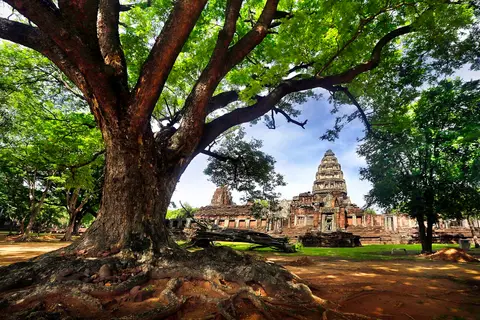
Korat (Nakhon Ratchasima)
นครราชสีมา
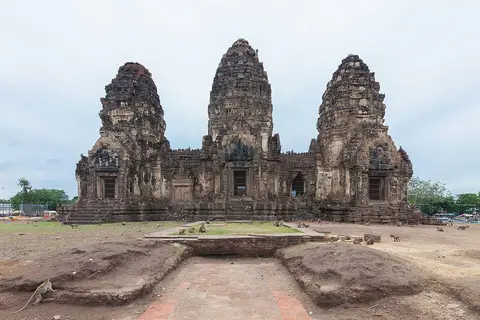
Lopburi
ลพบุรี
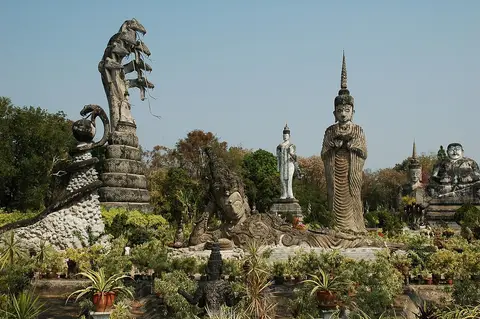
Nong Khai
หนองคาย
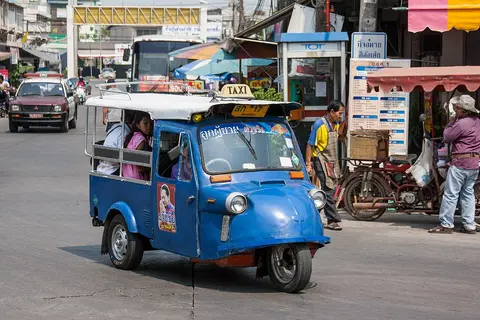
Phitsanulok
พิษณุโลก
Phuket
ภูเก็ต
River Kwai Bridge
สะพานข้ามแม่น้ำแคว
Sukhothai
สุโขทัย

Surin
สุรินทร์
Ubon Ratchathani
อุบลราชธานี
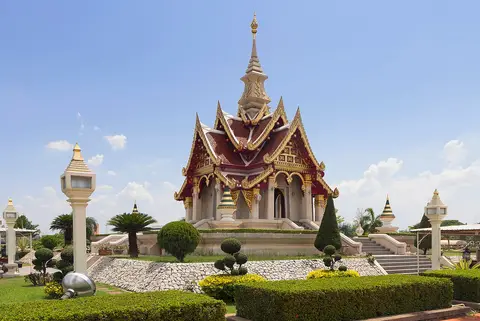
Udon Thani
อุดรธานี