
Guide
Backpacking Thailand
Shoestring, backpacker or flashpacker. Same Thailand, three budgets, and you pick where to splurge
Download the PDFSome links are affiliate links. We may earn a commission at no extra cost to you.
Checked November 2026. Latest version: thailandexplorer.org/guides/backpacking-thailand
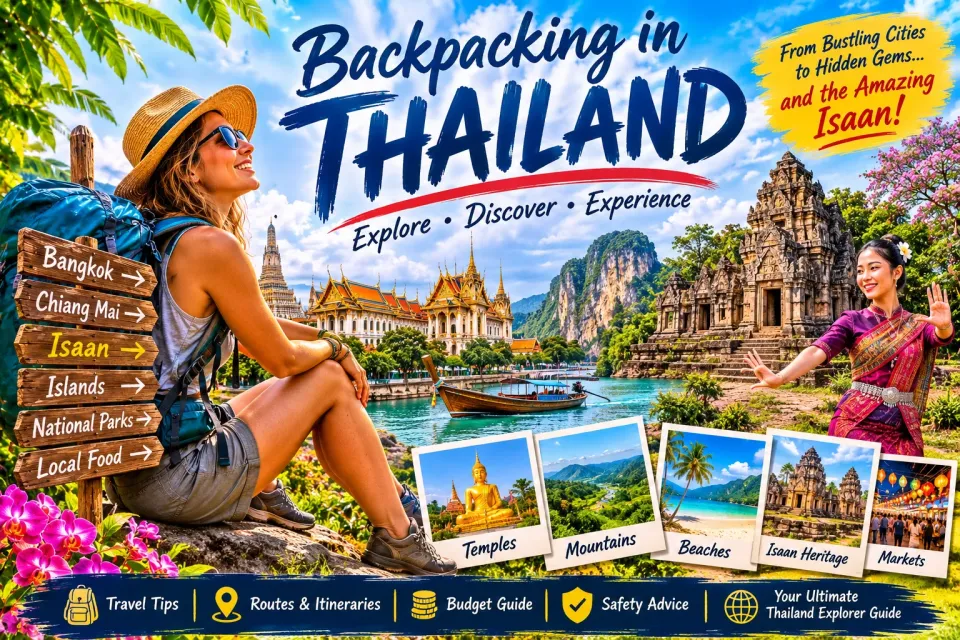
If you’ve been told Thailand is cheap, it can be. If you’ve been told it’s gotten expensive, that can be true too. It depends on where you go and what you sleep in. No worries, I got you.
I’m not a backpacker myself. My wife’s family farms in Buriram, in Isan, and I’m in Thailand a lot. What I see is that the same trip can cost 800 baht a day or 3,000, and most of the difference comes down to three things: your bed, how you move, and how long you stay on the islands. So this guide gives you three styles and lets you pick where to save and where to splurge.
I checked the prices below in November 2026. They come from hostel sites and travel guides that don’t always agree, so treat them as a rough budget, not a quote.
Pick your style
Most people end up mixing these. A shoestring week in the north pays for a flashpacker week on the beach.
| Style | About a day | What that gets you |
|---|---|---|
| Shoestring | 700 to 1,000 baht | Dorm beds, street food, buses and ordinary trains, free sights |
| Backpacker | 1,000 to 1,800 baht | Dorms plus a basic private room now and then, sleeper trains, a paid trip or two a week |
| Flashpacker | 1,800 to 3,000 baht | Private air-con rooms, the odd domestic flight, sit-down meals, tours and diving |
Your flight to Thailand, travel insurance and a dive course all come on top.
What’s a flashpacker? It’s “flash” plus “backpacker”. You still plan your own route and ride the same buses and trains. You just spend more on your room, fly the long legs now and then, and say yes to the tour. There’s no official line between the two, so don’t worry about the label. Pick the comforts you care about and save on the rest.
What a day actually costs
Here’s where the money goes.
| Item | Shoestring | Flashpacker |
|---|---|---|
| Bed | Dorm, about 150 to 400 baht | Private room, about 800 to 1,200 baht |
| Food | Street food, 40 to 80 baht a plate | Sit-down meals, 150 to 350 baht |
| Long trips | Bus or second-class sleeper | Sleeper berth or a domestic flight |
| Things to do | Temples, markets, hikes | Tours, cooking classes, diving |
A few things I’d know before you set a budget:
- The bed is the big one. A dorm in Chiang Mai runs about 150 to 250 baht, the cheapest of the big hostel towns. Bangkok runs about 150 to 400. On the islands it’s about 200 to 400 on Ko Pha Ngan and 350 to 550 on Ko Samui.
- Fan or air-con. For a private room, that’s the biggest price difference. A guesthouse room runs anywhere from about 280 to 1,200 baht.
- Full Moon week costs more. Dorms on Ko Pha Ngan go up around the party.
- ATM fees add up. Thai ATMs charge foreign cards a fee every time. Krungsri, one of the big banks, charges 250 baht on Visa and 350 on Mastercard. Take out more, less often. Carry cash, too. Thais pay by scanning QR codes, but that mostly works with a Thai bank account, and street stalls want baht.
Where to save, where to splurge
Save in the north and Isan, where rooms and food cost the least. Splurge on the islands, where a cheap bed can mean a long walk or a noisy road, and a good room makes the trip. If diving is on your list, Ko Tao is the place to learn. An Open Water course runs about 9,500 to 12,950 baht over 3 or 4 days, and a room is often extra.
Routes you can open in our planner
Each route below has an “open in the planner” link that loads the whole trip, stops and nights included, into our trip planner. Pick your month and it shows the usual weather at every stop, with ticket links for the legs we have. Then make it yours: add or drop stops, change the nights, or add nights and let “Suggest more stops” fill them.
Classic Thailand (3 to 4 weeks)
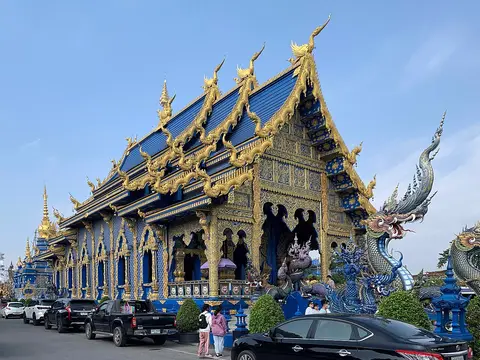
Bangkok, Ayutthaya, Chiang Mai, Pai, Chiang Rai, then one coast. This is the trip most backpackers do, and it’s popular for a reason. Open the Classic route in the planner.
Take the sleeper train north from Bangkok, then fly south from Chiang Rai or Chiang Mai. Flying that one leg saves you two days on a bus.
The North loop (10 to 14 days)
Chiang Mai, Pai, Mae Hong Son, Mae Sariang and back. Mountains, caves and small towns, and the cheapest part of the classic circuit. Open the loop in the planner.
Most people ride this loop, but you don’t have to. Minibuses run Chiang Mai to Pai and Pai to Mae Hong Son. The road has hundreds of bends, so take something for motion sickness.
One coast of islands (10 to 14 days)
Pick one coast by month. Crossing between them eats most of a day.
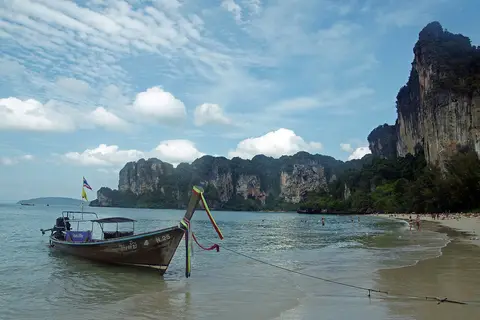
- November to April: the Andaman side. Khao Sok, Railay and Ko Lanta. Open the Andaman route.
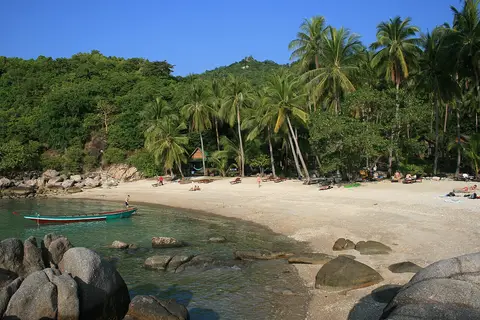
- January to September: the Gulf side. Ko Samui, Ko Pha Ngan and Ko Tao. Open the Gulf islands in the planner.
The Gulf islands get their heavy rain in November, right when the Andaman side is getting good. Rooms on Ko Samui can run 30 to 50% below Christmas prices then, but the sea is rough and boats to Ko Tao get cancelled, so I wouldn’t plan a beach trip there that month. Our islands guide has every island by month.
Isan, the Thailand most trips skip (10 to 14 days)
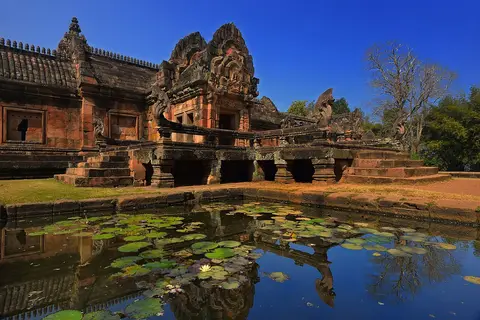
Korat, Buriram for the Khmer temple at Phanom Rung, Khon Kaen, Udon Thani and Nong Khai on the Mekong. Open the Isan route in the planner.
More on Isan below. If temples are your thing, our Khmer Temple Trail goes deeper.
Getting around on a budget
Sleeper trains. This is the backpacker’s best deal in Thailand. You sleep on the way and skip a night’s room. A second-class berth from Bangkok costs about 941 to 1,041 baht to Chiang Mai, 894 to 994 to Nong Khai, 879 to 979 to Ubon and up to 1,004 to Surat Thani for the Gulf islands. The lower berth is the more expensive one and a bit roomier. Book on the official D-Ticket site or through 12Go, which adds a fee. Our Thailand by Train guide has the times and how to book.
Ordinary trains. For short hops they’re almost free. Bangkok to Ayutthaya costs about 15 to 20 baht.
Buses and minivans. They go where the trains don’t. Book at your guesthouse, at the bus station, or online. For the Gulf islands, a minivan and ferry from Surat Thani to Ko Samui runs about 420 to 750 baht. Chumphon to Ko Tao is about 900. Leave 3 to 4 hours between your train and the onward minivan at Surat Thani, because the trains run late.
Domestic flights. That’s the flashpacker move for the long legs, like Chiang Mai to Krabi. Count the airport transfers before you decide it’s cheaper than the train.
Scooters. I’d skip them unless you already ride at home. Thailand’s roads are some of the deadliest in the world, and most of the people killed are on motorbikes. Without a motorcycle license and an International Driving Permit, your insurance may not pay. Our motorcycle section covers renting a scooter if you do.
When to go
Thailand doesn’t have one season. The north, the Andaman coast and the Gulf islands each have their own.
- November to February is the easy window for Bangkok, the north and the Andaman coast. It’s also high season, so dorms fill up and prices go up. Book the first few nights.
- March and April are hot, and the north can get smoky.
- May to October is the wet season for most of the country. It’s cheaper and quieter, and the Gulf islands are at their best for much of it.
Each month page shows where the weather is best.
Where to stay
- Hostels. Dorm beds, a common room and an easy way to meet people. Chiang Mai, Bangkok and the party islands have the most.
- Guesthouses. Simple private rooms, often family-run. In small towns and across Isan, this is usually the cheapest bed in town.
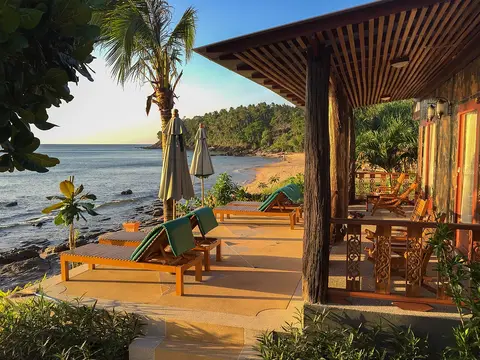
- Bungalows. Huts on the beach, mostly on the islands. Check what you get before you pay, from a bare fan hut to something nicer.
- Homestays. You stay with a local family, mostly in villages. That’s the closest you’ll get to how people actually live.
For a flashpacker, the upgrade that’s worth it is a private room with air-con and a good location. You don’t need a resort.
Isan: the cheapest, least crowded part of Thailand
This is the part of Thailand I know best. Isan covers the whole northeast, and most backpackers never set foot in it. Prices are noticeably cheaper than in the south, the food is some of the best in the country, and nobody is selling you a tour.
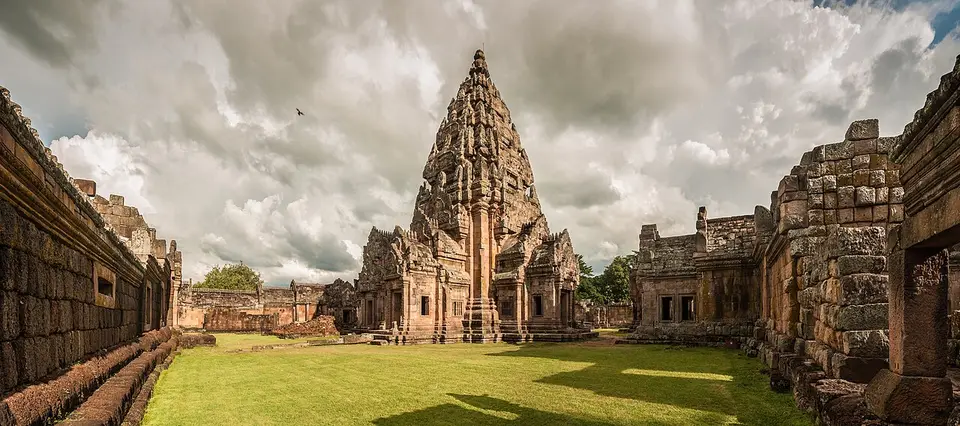
What’s worth the trip:
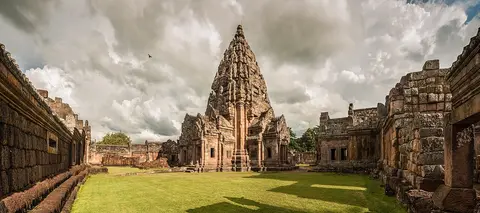
- Khmer temples. Phanom Rung sits on an old volcano, with Prasat Muang Tam just below it and Phimai near Korat. Our Khmer temples guide and Buriram guide have the details.
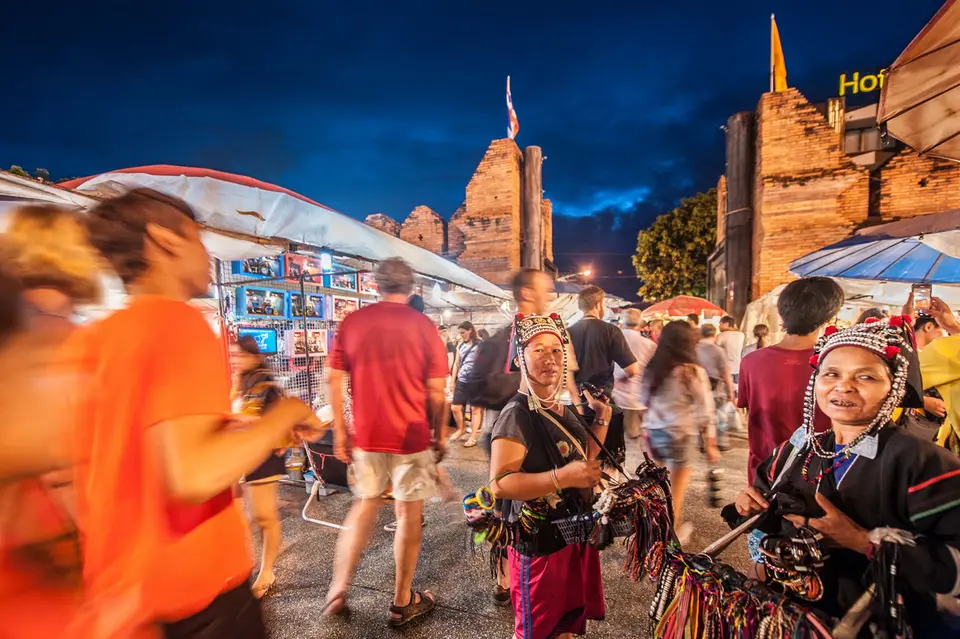
- Temples by day, a night out after. This is the one almost nobody writes about. Buriram is a small town with a real local night scene: a big beer hall with Thai bands, live-music bars, a club, and a night market by the station. Climb Phanom Rung in the morning, then go out in town. Go on a weekend or when Buriram United play at home, and the whole town is buzzing. Our Buriram guide lists the spots.
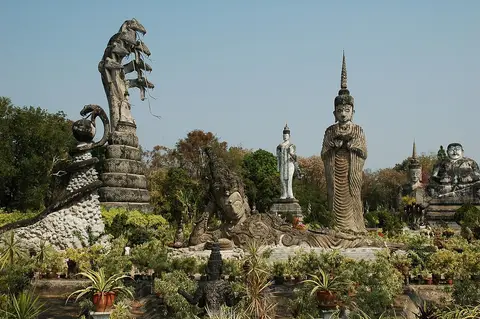
- The Mekong towns. Nong Khai is an easy, slow town on the river, and Chiang Khan has an old-wooden-house walking street.
- Food. Som tam, larb, grilled chicken and sticky rice all come from here. Our Isan food pages and Isan phrases will help you order.
- Laos is right there. From Nong Khai, a short shuttle train crosses the Mekong to Khamsavath, outside Vientiane. A ticket with the minivan into Vientiane costs about 300 baht at Nong Khai station. There’s also a direct overnight train from Bangkok’s Krung Thep Aphiwat station. In November 2026, train 133 left at 21:25 and reached Udon Thani at 07:02 before going on to Khamsavath. Check the times before you go, since they change.
Two things to know. English is less common, so a few Thai words go a long way. And buses between smaller towns are slower and less frequent, so give yourself time. Before you cross any border, check your own government’s travel advice.
Before you fly
The basics are the same as any first trip, and our Thailand for Beginners guide covers them. The short version:
- Tourists from 60 countries and territories, including the US, UK, Canada, Australia, New Zealand and the EU, can stay 30 days without a visa from September 15, 2026. You can ask for one extension of up to 30 days.
- Fill in the free Thailand Digital Arrival Card in the 3 days before you arrive. Skip the look-alike sites that charge for it.
- Officers can ask for an onward ticket and proof of 10,000 baht. It isn’t checked on everyone, but have both ready.
- Planning to hop over to Laos and come back? The UK government says visa-free entry over a land border is normally limited to 2 times a calendar year. Arriving by air doesn’t count toward that. Rules depend on your passport, so check yours.
- Save these numbers: tourist police 1155, police 191, ambulance 1669.
What I’d do differently
Here’s what I’d tell a friend, from my own trips.
- Fewer stops, longer stays. Moving every day or two wears you out. Two or three nights is my minimum now.
- Take the sleeper train. It beat a cheap flight for me. You save a night’s room and wake up where you’re going.
- Go to Isan sooner. It’s where I spend most of my time now. It’s cheaper and friendlier, and you’ll hardly see another tourist.
- Don’t book every night. Leave a few nights open so you can stay longer in the place you like.
Book it
Here’s where I’d look for tickets, beds and tours on the main backpacker stops. Booking.com lists hostels and guesthouses as well as hotels.
Where to go from here
Pick your style, pick a route, then open the planner and make it yours. If one place has you curious, browse all the places or look around the map of Thailand.
Common questions
How much does backpacking Thailand cost per day?
On a shoestring, about 700 to 1,000 baht a day with dorms, street food and buses. A typical backpacker spends about 1,000 to 1,800 baht. A flashpacker with private rooms and the odd flight spends about 1,800 to 3,000 baht. These are November 2026 estimates, before your flight to Thailand.
What is flashpacking?
Flashpacking is backpacking with a bit more money. You still plan your own route and take buses and trains, but you sleep in private rooms, fly the long legs now and then, and pay for tours or diving. There's no fixed line between the two.
Is Thailand good for backpacking?
Yes. Dorms and guesthouses are everywhere on the main routes, street food is cheap, and sleeper trains and buses link most of the country. The islands cost the most. The north and Isan cost the least.
What is the cheapest part of Thailand to backpack?
Isan, the northeast, and the north. Chiang Mai is the cheapest big hostel town, and Isan towns like Khon Kaen and Nong Khai see few tourists, so prices stay local. The popular islands are the most expensive.
How long do you need to backpack Thailand?
Three to four weeks covers Bangkok, the north and one coast without rushing. With two weeks, pick the north or the islands, not both. Plan on two or three nights at each stop.
Is the sleeper train worth it for backpackers?
Yes. A second-class berth from Bangkok to Chiang Mai costs about 941 to 1,041 baht and saves a night's room. You sleep on the way and wake up in the north.
Do I need a visa to backpack Thailand?
Tourists from 60 countries and territories, including the US, UK, Canada, Australia, New Zealand and all EU states, can stay up to 30 days without a visa from September 15, 2026. You also fill in the free Thailand Digital Arrival Card in the 3 days before you arrive.
Places in this guide
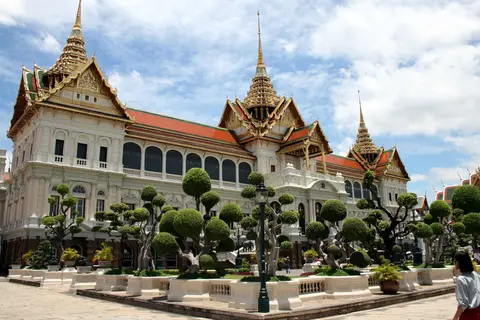

Thailand Explorer is a free guide to places across Thailand, from a family with a farm in Buriram. See it at thailandexplorer.org
Not sure where to go next?
Tap one button in the Thailand Explorer app. It picks a place, shows it on a map with a travel video, and lets you save it to your bucket list.
Get the free iPhone appNo account, no subscription.