
Guide
Thailand for Beginners
What to sort out, where to go and what to skip on your first trip
Download the PDFChecked November 2026. Latest version: thailandexplorer.org/guides/thailand-for-beginners
If this is your first trip to Thailand, no worries, I got you. It’s an easy country to travel in, and you can book most of it on your phone. What goes wrong is usually simple. Too many stops, or a ticket for the wrong airport.
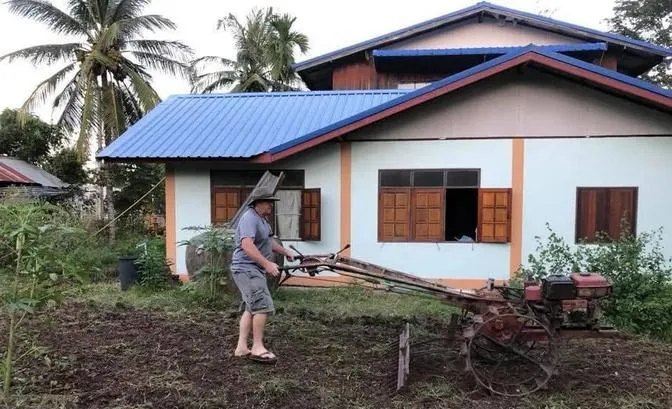
Here’s what I’d tell a friend before they go. My wife’s family farms in Buriram and I visit often. I checked the facts below in November 2026, but rules and prices do change, so look again at the big ones before you book.
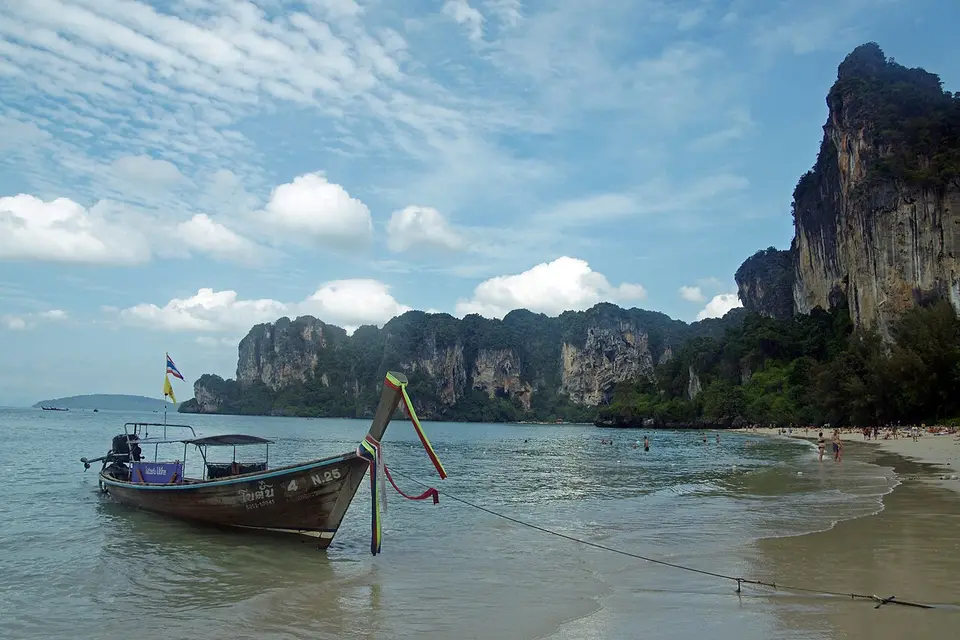
Your first week of planning
Do these in this order and the rest gets a lot easier.
- Pick your month, because it decides which coast you can use.
- Pick two or three bases. Not five.
- Check your passport. You need at least six months left when you arrive.
- Book your flights, then your first hotel night.
- Book any sleeper train or domestic flight you’ve set your heart on.
Leave the day trips until you get there. You’ll know more by then, and you’ll probably change your mind anyway.
How long to go for
With 7 to 10 days, do Bangkok plus one other place. That could be Chiang Mai or a beach, but I wouldn’t try both.
Two weeks gets you Bangkok, the north and a beach, which is our First Trip route. With three weeks or more, stay longer in each place, or add somewhere like Sukhothai or Isan.
Every move costs you most of a day once you’ve packed, checked out, traveled and found your room. Count those days before you add another stop.
Where to go first
Thailand looks small on a map, but it’s more than 1,600 km from top to bottom. Here’s how I’d choose.
| If you want | Go to | Good to know |
|---|---|---|
| Temples, street food, nightlife and river life | Bangkok | Three nights is a good start for a first visit |
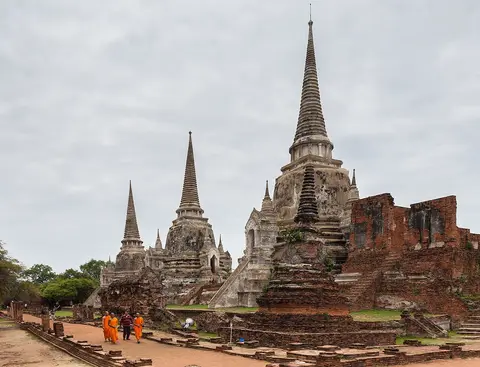
| Old capital ruins | Ayutthaya | Easy day trip by train from Bangkok |
| Temples, mountains and cooler air | Chiang Mai | Best from November to January |
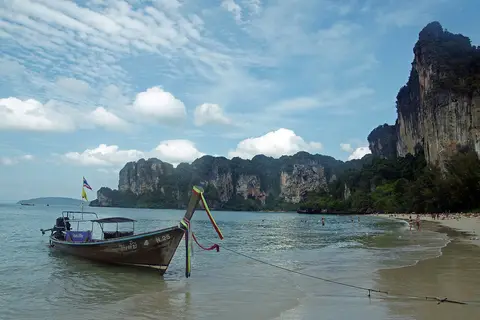
| Limestone cliffs and beaches | Railay or Ko Lanta | Andaman coast, best from December to March |
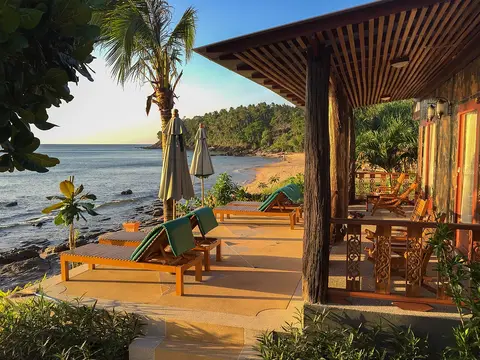
| Gulf islands | Ko Samui or Ko Tao | Best from February to April |
| The Thailand most trips skip | Isan, starting with Buriram | Fewer visitors, and less English spoken |
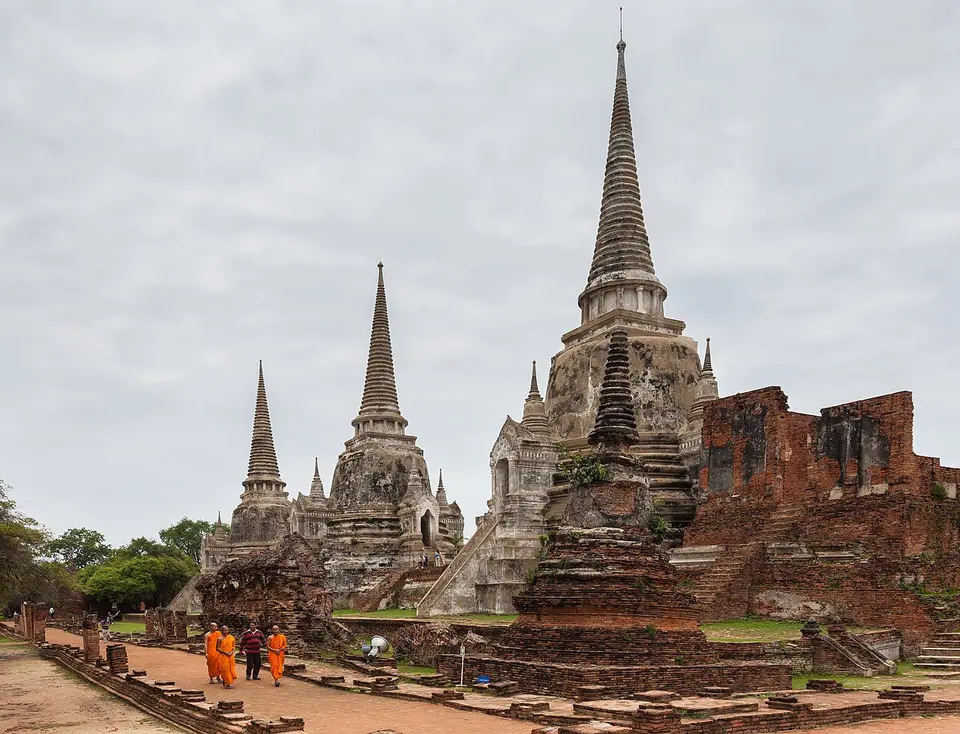
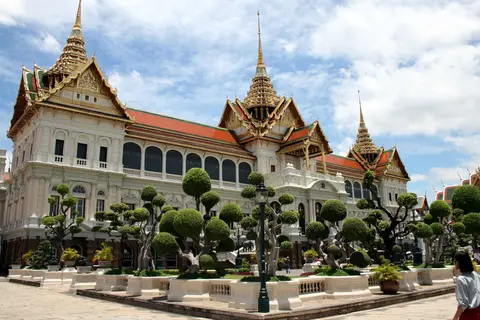
Bangkok gets sold short as temples and food. It’s got those, including the Grand Palace and Wat Arun, but there’s a lot more. The nightlife is thriving, you can get around the old city by river boat, and the city has great medical facilities if you ever need them.
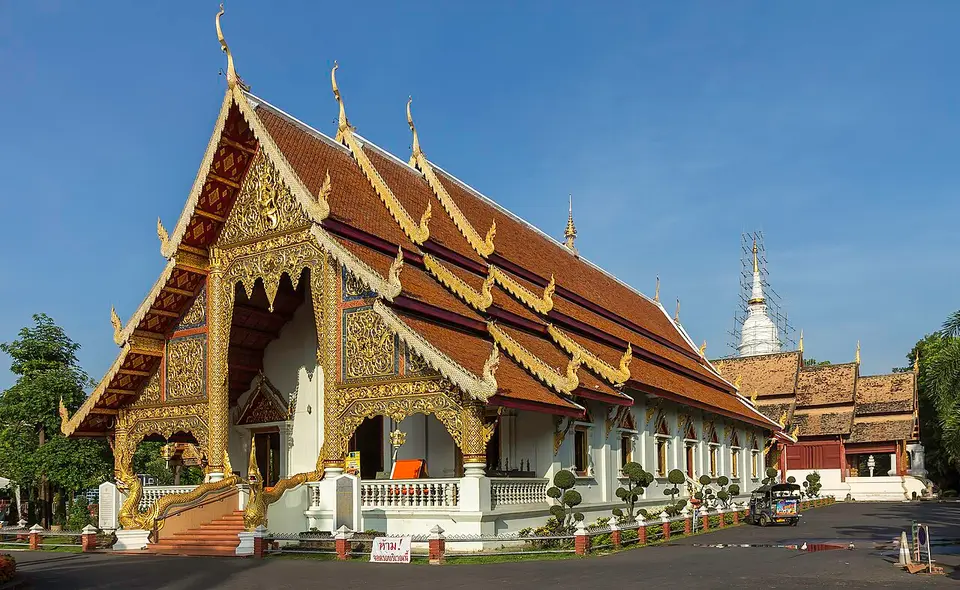
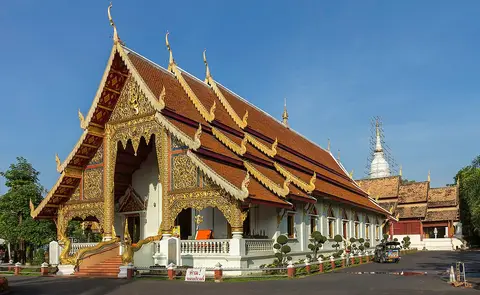
Chiang Mai has a lot of great temples, so give it a few days. Start with Wat Phra Sing, a 14th-century Lan Na temple inside the old city walls, then go up Doi Suthep to Wat Phra That Doi Suthep, about 15 km from the center.
If you’d rather not work out the order yourself, our routes already have it done, with nights and transport for each stop.
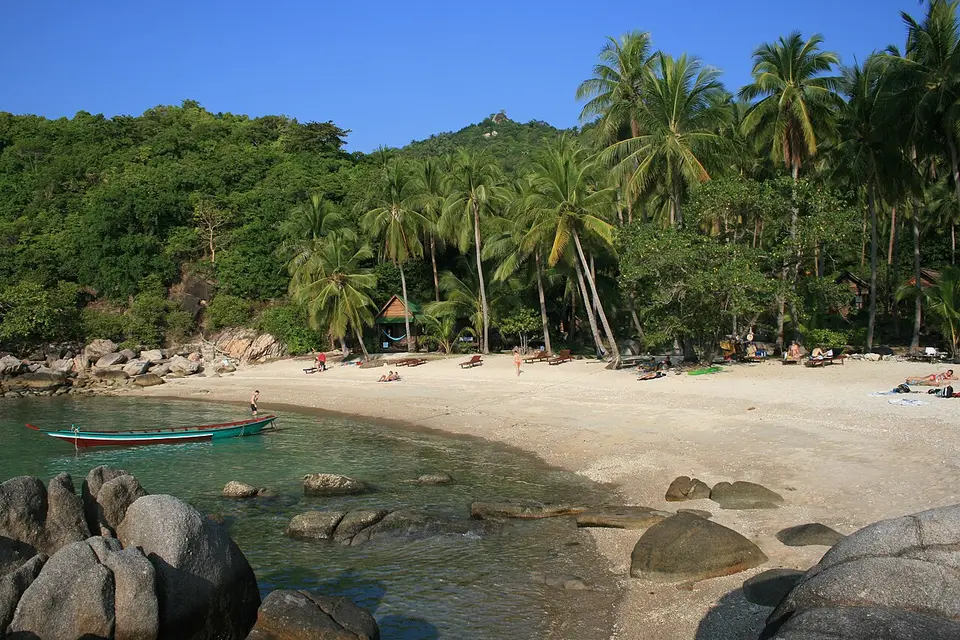
Where to go diving
Never dived before? Go to Ko Tao. It’s a small island built around scuba diving, and it’s where I’d send a beginner. Dive schools there listed the Open Water course at about 9,500 to 12,950 baht in 2026, usually over 3 or 4 days. A room is often extra, so ask what’s included.
| Island | Coast | Good for | Best or open |
|---|---|---|---|
| Ko Tao | Gulf | Learning to dive | Best from February to April |
| Similan Islands | Andaman | Coral reefs and underwater rock formations | Open about mid-October to mid-May |
| Surin Islands | Andaman | Coral, turtles, and sometimes whale sharks and manta rays | Open about mid-October to mid-May |
| Ko Phi Phi | Andaman | Diving as part of a beach stay | Best from December to March |
| Ko Lipe | Andaman | Diving farther south | Best from December to March |
| Ko Ngai | Andaman | Diving and long white beaches | Best from December to March |
The Similan and Surin parks close for the monsoon, and the dates are set each year, so check them before you book. Visitor numbers to the Similans are capped and you can’t stay overnight on the islands, so plan on going by boat.
Check that your travel insurance covers diving, and ask your dive school how long to wait before you fly home.
When to go
December and January, if you can. Most of the country is at its best, though those are also the busiest months, so book your rooms early.
| Area | Best months |
|---|---|
| North and Isan | November to January |
| Bangkok and Central | December and January |
| East coast and islands | December to February |
| Andaman coast (Phuket, Krabi, Trang) | December to March |
| Gulf coast (Samui, Pha-ngan, Tao) | February to April |
The two coasts run on different seasons. A rainy month on one side can be a fine month on the other. March and April are hard work in the north and in Bangkok, with heat everywhere and smoke in the north. Our month-by-month guide has the detail.
What it costs
These are what 2026 travel guides report, not counting your flight to Thailand. They vary a lot, so treat them as a rough budget.
| Per day | |
|---|---|
| Backpacker | About 900 to 1,800 baht |
| Mid-range | About 2,150 to 3,600 baht, more with nice hotels |
A basic guesthouse runs about 500 to 700 baht in Chiang Mai and 800 to 1,200 in Bangkok. Street food is the big saving at about 40 to 80 baht a meal, against 150 to 350 baht for a sit-down restaurant. Boats and transfers are what push island days up.
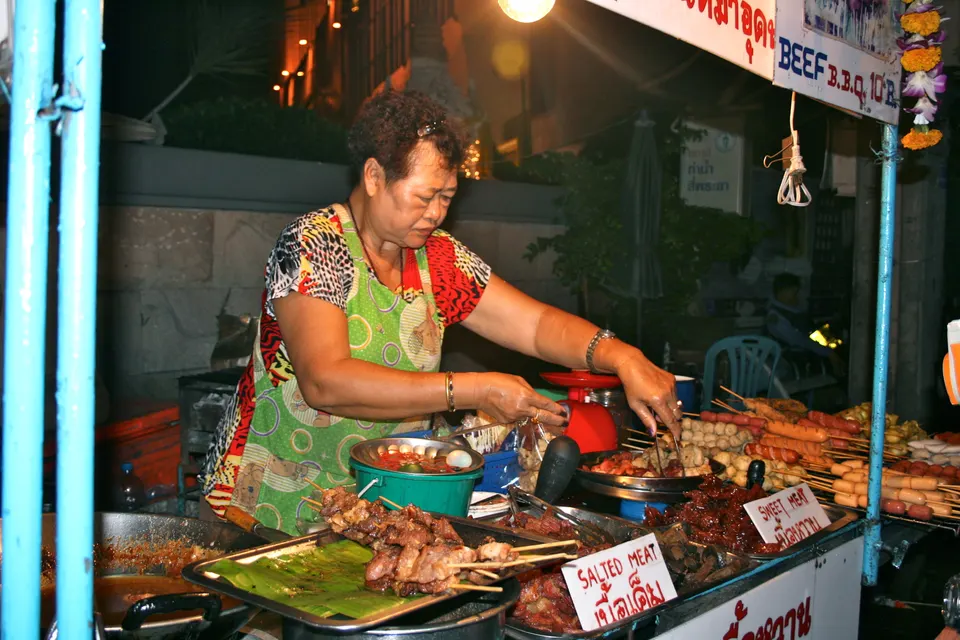
Tipping isn’t expected. Leaving 20 to 50 baht for good service is fine. Haggle at markets, but not in malls.
Cash and ATMs
ATMs charge foreign cards a fee on every withdrawal, and it went up this year. Krungsri, one of the big Thai banks, now charges 250 baht on Visa and 350 baht on Mastercard. Your own bank may add its fee too, so take out more at a time and go less often. When a machine or card reader offers to convert to your home currency, say no and pay in baht.
Bigger hotels and restaurants take cards. Keep cash for street food, small shops and boats, and try to hold on to some small notes.
Before you fly
Passport. It needs at least six months left when you arrive and one blank page.
Visa. Since September 15, 2026, tourists from 60 countries and territories can stay up to 30 days without a visa. That includes the US, UK, Canada, Australia, New Zealand and all EU states, and you can check the full list from the Tourism Authority of Thailand. Lots of older pages still say 60 days, so don’t go by those.
Arrival card. All passengers have to complete the Thailand Digital Arrival Card in the 3 days before they arrive. It’s free. Thai immigration has warned about look-alike websites that charge for it, so use that link.
Proof you’re leaving. Officers may ask for a return or onward ticket, and travelers have been refused entry without one. They can also ask for proof of funds, currently 10,000 baht per person or 20,000 per family if you’re visa-exempt. It’s not checked on everyone, but have both ready.
Insurance. Buy travel insurance, and read what it says about motorbikes before you need it.
Vapes. Leave them at home. They’re illegal in Thailand and the penalties are serious, so read this before you pack.
What to pack. Pack light clothes, something that covers your shoulders and knees for temples, sunscreen and mosquito repellent.
Your government’s advice. Read your own government’s Thailand page close to your trip. It’s free, and it’s where changes show up.
Arriving in Bangkok
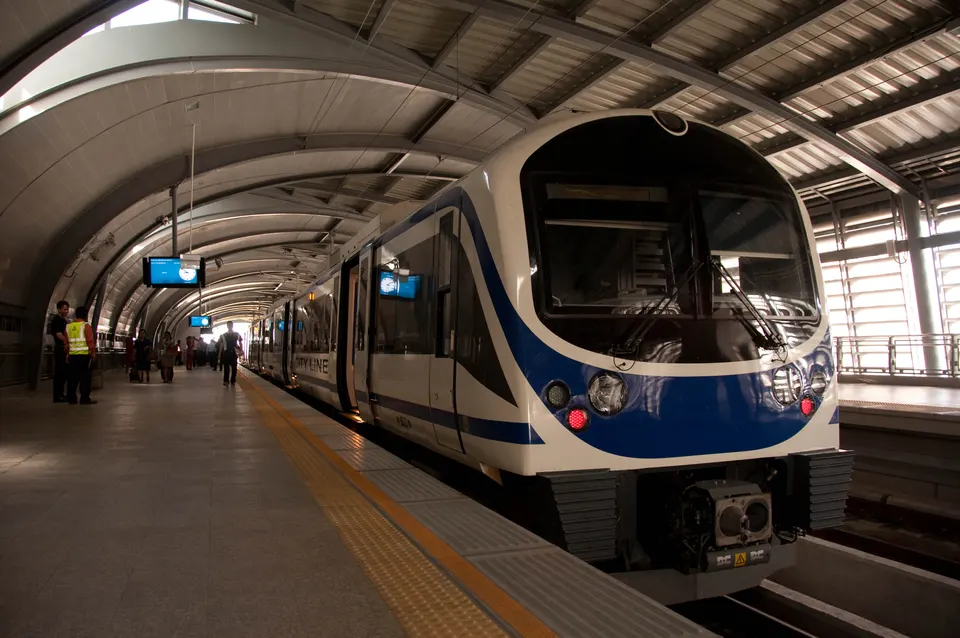
Bangkok has two airports, so check which one is on your ticket.
| From | Take | About |
|---|---|---|
| Suvarnabhumi (BKK) | Airport Rail Link to Phaya Thai, then the BTS Skytrain | 30 minutes, 45 baht |
| Don Mueang (DMK) | A1 bus toward Mo Chit, 6am to midnight | 20 to 45 minutes, 30 baht |
| Don Mueang (DMK) | Dark Red Line to Krung Thep Aphiwat, then the MRT | 15 to 30 minutes, about 33 baht |
If you land late or have heavy bags, take a taxi from the official line or book a Grab. After a long flight, I think that’s money well spent.
Set your phone up before you leave the airport. Buy an eSIM at home, or a SIM at an airport counter, so maps, Grab and translation work right away. It’s also worth having Google Maps, Grab and a translate app ready before you land.
Where to stay in Bangkok
For a first visit, stay near a BTS or MRT station so you can skip the traffic. Sukhumvit and Siam are the easy choices, and the riverside works well if you want to be close to the Grand Palace and the Chao Phraya boats.
Getting around
Trains are the classic way north, and there’s a sleeper from Bangkok to Chiang Mai. Long-distance trains now leave from Krung Thep Aphiwat, not Hua Lamphong, which plenty of older guides still get wrong. Our Thailand by Train guide covers stations, classes and booking.
Domestic flights are the quick way between far-apart places, and buses and vans reach most of what trains don’t. 12Go is handy for comparing them.
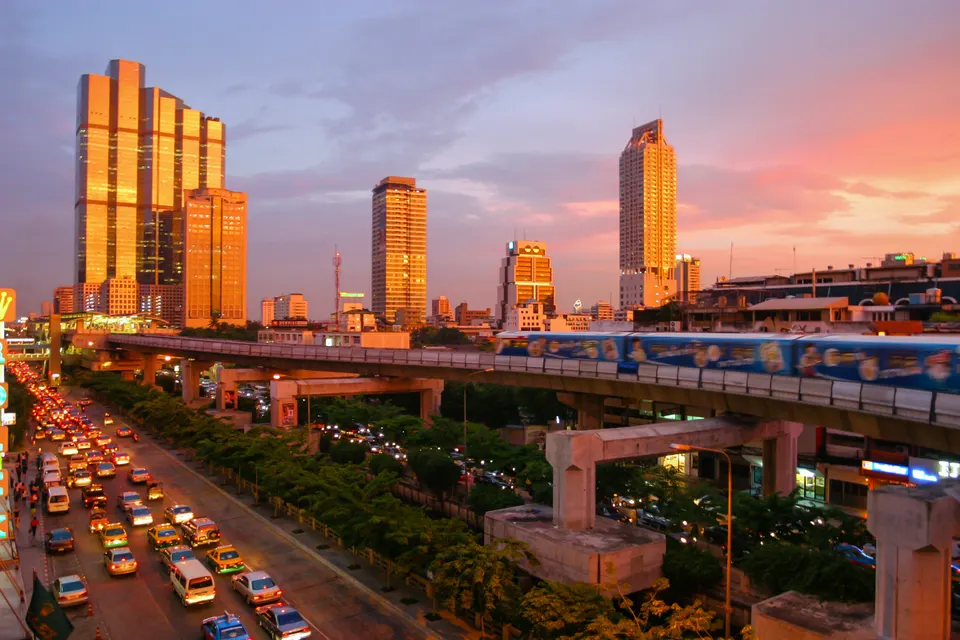
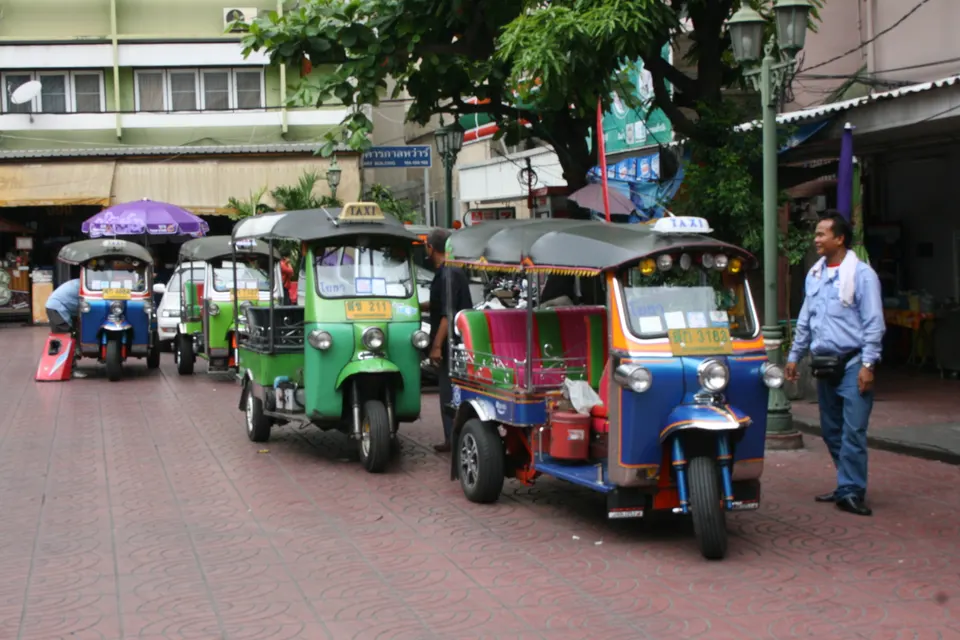
In Bangkok, use the BTS, the MRT and the river boats where you can. Grab shows you the price up front, and in a regular taxi you ask for the meter. Tuk-tuks are fun for a short ride, as long as you agree on the price before you get in.
Islands and places like Railay depend on boats, and boats depend on the weather. Try to arrive early in the day. Before you fly home, spend your last night near your airport, because a late sleeper or a canceled boat can cost you a flight.
What to eat
Eat the street food. The CDC’s tip is to pick stalls that cook to order and serve it steaming hot, and busy stalls are a good place to start.
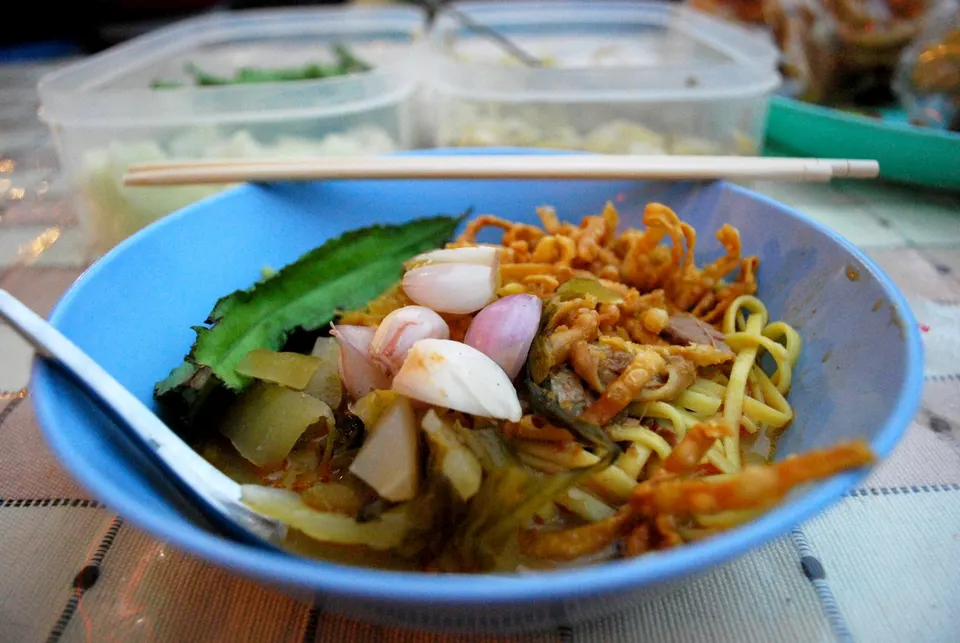
Try pad thai and som tam in the first few days, and khao soi when you get to the north. Our food guide tells you what to order in each region. If you don’t eat meat, learn how to ask for it, because fish sauce turns up nearly everywhere.
Staying safe and healthy
Most trips go fine. Here’s what’s worth knowing.
Scooters
This is the one I’d take most seriously. Riding without a valid motorcycle license is illegal, and that could mean your insurance doesn’t pay. Canada’s travel advice says to avoid riding motorcycles in Thailand altogether, even if you’re experienced. The CDC says about 3 in 4 road deaths there involve motorcycles and scooters. So if you’ve never ridden one, don’t learn here.
If you do rent, wear a helmet. Don’t leave your passport as a deposit, because the UK government warns that rental companies may hold on to it over claimed damage. That goes for jet skis too. Take photos of the bike all the way around before you ride off.
Scams
An old one starts with a friendly stranger near a temple, who says it’s closed today and offers a cheap tuk-tuk tour. Walk away and check for yourself. Those tours tend to end at a gem or suit shop, and Canada warns about merchants selling low-quality gems at inflated prices.
Water, bites and drinks
Don’t drink the tap water. The CDC says to stick to sealed drinks and to avoid ice too, so that part’s your call.
Dengue is found across Thailand, so wear repellent and cover up in the evening. Stay away from monkeys and stray dogs. If one bites or scratches you, the CDC says to scrub the area with soap and running water for at least 20 minutes, then get medical care right away.
Don’t leave your drink unattended, and be careful with drinks from people you’ve just met.
Vapes
Vapes are illegal in Thailand. That covers bringing one in, owning one and using one, along with the refills. Canada’s travel advice warns of heavy fines or up to 10 years in prison. So don’t pack it, even if it’s only for personal use, and don’t buy one once you’re there.
Cannabis
The old stories are out of date. Since June 2025, you need a prescription from a licensed practitioner in Thailand to buy or carry cannabis flower, and the Tourism Authority says recreational use has never been legal. Taking it out of the country is illegal.
Emergency numbers
| Who | Call |
|---|---|
| Tourist police | 1155 |
| Police | 191 |
| Ambulance | 1669 |
Being a good guest
You don’t need to get everything right. Cover your shoulders and knees at temples, and take your shoes off before going into the main buildings.
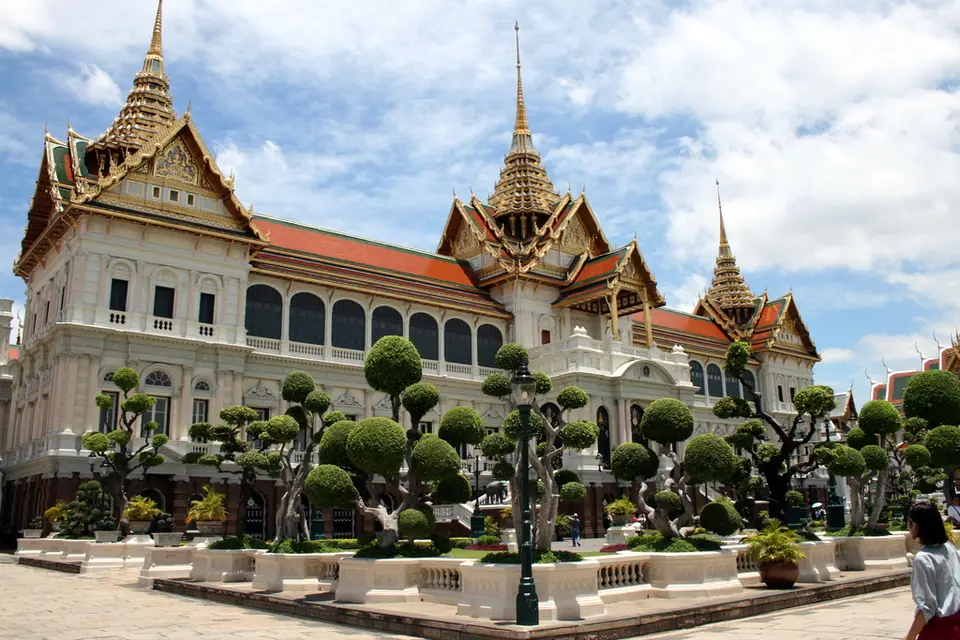
Don’t point your feet at people or at Buddha images. Skip elephant rides and shows too.
Be careful about the royal family, in what you say and what you post online. Insulting them is a crime in Thailand and can bring a long prison sentence.
Learn “hello” and “thank you” with our Thai phrases. Our etiquette guide has the rest.
First-trip mistakes to skip
- Too many stops. You’ll remember three places you got to know better than seven you only checked into.
- Picking islands before the month. Check which coast suits your dates first.
- Booking the wrong airport. A cheap connecting flight can leave from the other one, and they’re across the city from each other.
- Overstaying. Count your days against what your passport allows. A 30-day stay can be extended once at an immigration office, but that’s up to the officer.
- Copying a viral itinerary. Pictures don’t show the eight-hour transfer between them.
- Filling every day. Leave some empty.
Where to go from here
Pick your month, pick your bases, then look at a route that fits. If one place has you curious, browse all the places or look around the map of Thailand.
Hope this is helpful. Enjoy your first trip.
Common questions
Is Thailand good for first-time travelers?
Yes. It's easy to get around and you can book most things on your phone. The usual problem is trying to see too much, so pick two or three places and stay a few nights in each.
How many days do you need for a first trip to Thailand?
Two weeks is a good length for two or three bases, such as Bangkok, Chiang Mai and a beach. With 7 to 10 days, I'd pick Bangkok plus one other place.
How much does a trip to Thailand cost per day?
Travel guides put a backpacker day at about 900 to 1,800 baht and a mid-range day at about 2,150 to 3,600 baht in 2026, not counting flights. Those are estimates and they vary a lot.
Do I need a visa for Thailand?
Tourists from 60 countries and territories, including the US, UK, Canada, Australia, New Zealand and all EU states, can stay up to 30 days without a visa. That rule started on September 15, 2026. You also need to complete the free Thailand Digital Arrival Card in the 3 days before you arrive.
What is the best month to visit Thailand for the first time?
December and January are the easiest, since most of the country is at its best then. They're also busy, so book rooms early. If you only want the Gulf islands, February to April is their best stretch.
Are vapes illegal in Thailand?
Yes. Bringing in, owning or using a vape or its refills is prohibited. Canada's travel advice warns of heavy fines or up to 10 years in prison, so leave yours at home.
Which Thai islands have good diving?
Ko Tao is the place to learn. The Similan and Surin Islands are known for coral and sea life and are open about mid-October to mid-May. Ko Phi Phi, Ko Lipe and Ko Ngai also have diving on the Andaman coast.
Can you drink the tap water in Thailand?
No. The CDC advises against tap water and says to drink from sealed containers and avoid ice. Bottled and filtered water is easy to find.
Places in this guide



Thailand Explorer is a free guide to places across Thailand, from a family with a farm in Buriram. See it at thailandexplorer.org
Not sure where to go next?
Tap one button in the Thailand Explorer app. It picks a place, shows it on a map with a travel video, and lets you save it to your bucket list.
Get the iPhone app$4.99 once. No account, no subscription.